Tuesday, May 30, 2023

Unexpected Joy (An Allocution to the Legion of Mary)

In the enormous number of hagiographies that come down to us from Christian Tradition, who are the people who are the most devoted to the Mother of God? Invariably, the great devotees of Mary, Most Holy, are those who were very great sinners, converted to the Lord through the loving kindness of their good Mother. Earlier in the spring, I brought to you the example of the long alphabetic hymn written in Ge'ez (the liturgical language of Ethiopia) by an anonymous Ethiopian monk. Nothing is known about the author, except what he himself tells us in the body of the hymn. He tells us that he was among the greatest of sinners, but, through the pity of the Most Holy Mother of God, he was brought to repentance and reconciled with Her Son. This same wandering monk wrote his hymn in homage to the Mother of God as a offering of thanksgiving for her intercession, so instrumental in bringing him repentance and forgiveness.

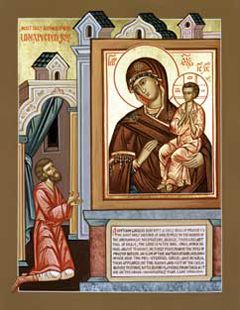
In the same way, we have the miraculous icon called "Unexpected Joy." The icon of the Most Holy Mother of God, in this case is an icon inside an icon. The icon of her holding her Son is depicted hanging on a wall with a youth praying before it. There are three inscriptions on the icon. The first consists of words coming from the youth's mouth addressed to the Mother of God. The second, consists of the words of the Blessed Mother's reply, and the third, underneath Our Lady's icon, is a synopsis of the beginning of the icon's legend.

The icon depicts a moment in a story. The story is that there was a youth who was living a very sinful life. Nevertheless, he had a personal prayer rule of praying the Archangel Gabriel's greeting to the Mother of God 150 times every day. One day, he was fulfilling this rule just before leaving his house to commit sin. Just as he was finishing his prayers, the icon seemed to come alive, the Christ-child held up His little hands and copious amounts of blood poured from His little hands, His feet and His side. The youth cried out, "O Mistress, who has done this?" The Mother of God replied, "You and other sinners re-crucify my Son daily." The young man repented and obtained the forgiveness of his sins. The youth's freedom from sin is the "Unexpected Joy" for which the icon is named.

The message of these two examples seems to be: if you want your sins forgiven, you had better be devoted to the Most Holy Mother of God. In light of the Church's hymnography, this makes perfect sense. The Virgin's intercession on behalf of sinners is not infrequently depicted in the hymns. Although it is often said that the Lord will refuse nothing to His Most Holy Mother, the hymns usually depict this intercession as pretty much a "hard sell." An example of this is the metrical hymn by Saint Theodore the Studite, in which, in each of the nine odes, Theodore entreats the Mother of God, who, in turn, entreats her Son. He replies to her; then, she turns again and addresses Theodore. Finally, at the end of ode nine, Christ finally concedes to His Mother that He will forgive Theodore's sins as long as he continues to show "fruits of repentance.

Naturally, if we want our sins to be forgiven, we need to make our confession and receive absolution, but, it seems, there is more to it than that. If we truly want forgiveness and freedom from sin, we have to become very, very attached to the Most Holy Mother of God, our Mother. Perhaps the essential nature of this devotion in the areas of the remission of sins and freedom from sinful habits should be a regular part of the Legion's kerygma. Perhaps we should be saying to all our neighbors, "Do you want your sins to be forgiven? Then draw near to the Most Holy Mother of God. Love her and become very devoted to her. Ask her to obtain forgiveness for you. Don't leave her alone until she does it."

Friday, May 26, 2023

РІЧКА НАШИХ ДУМОК ПРОТИ РІЧКИ СВЯТОГО ДУХА THE RIVER OF OUR THOUGHTS VERSUS THE RIVER OF THE HOLY SPIRIT

Сьогодні, Святе Євангеліє нам каже, що коли ми віруємо в Господа Ісуса, річки води живої течуть від нашого лона. Воно пояснює те, що Господь Ісус відносився до Святого Духа, коли Він це сказав. Багато речей, що Євангеліє не сказало, які є важливими, щоб розуміти. Перше, що таке є річка? Зрештою, ми не можемо розуміти слова Господні згідно буквального сенсу. Ми мусимо розуміти ці слова згідно духовного значення, бо ми знайдемо у Святому Письмі часто те, що річка є символом навчання. Наприклад, у книзі пророка Єзекиїла, пророк каже про річку, яка тече від східного храмового боку і дає світові нове життя, роблячи навіть море свіжою водою. Це символ животворного навчання, що його, у новому світі після месіянського приходу, Христос послав би з Єрусалиму на край світу. Тут, подібна річка є присутністю у світі Святого Духа, і, особливо, навчання Святого Духа, бо Святий Дух є Тим, Хто, згідно Господніх слів, приведе нас до всієї правди. Отже, Він називається «Духом Істини,» так, як ми співаємо: «Царю небесний, Утішителю Душе Істини....»

Today, the Holy Gospel tells us that when we believe in the Lord Jesus, rivers of living water flow from within us. It explains that the Lord Jesus was referring to the Holy Spirit when He said this. There are many things that the Gospel does not say, which are important for our understanding. First, what is this “river?” After all, we cannot understand the words of the Lord according to their literal meaning. We must understand these words by their spiritual sense, since we find in the Holy Scripture that, often, a river is a symbol of teaching. For example, in the Book of the Prophet Ezekiel, the prophet speaks about a river, which flows from the eastern side of the Temple and gives new life to the world, making even the sea into fresh water.  This is a symbol of the life-giving teaching, which, in the new world after the coming of the Messiah, Christ would send from Jerusalem to the ends of the earth.  Here, a similar river is the presence of the Holy Spirit in the world, and, especially, the teaching of the Holy Spirit, since the Holy Spirit is that One, Who, according to the words of the Lord, will lead us into all truth. Therefore, He is called “the Spirit of Truth,” just as we sing: “O Heavenly King, Comforter, Spirit of Truth….”

Якщо ми роздумаємо, ми пізнаємо те, що завжди річка у нас, тому що наші думки є неначе річкою, дійсно без початку і без кінця. І не тільки це, а також ми пізнаємо те, що річка наших думок (без початку і без кінця) не має берегів, і зміст цієї річки є непостійний і завжди змінений. Це дуже велика частина філософської проблеми тотожности, бо кожний час, коли ми дивимося на річку, вона інша від тієї, яка була перед тим. Хоча зміст річки постійно змінюється, знаємо те, що річка є завжди брудною пристрастями, особливо гнівом і прихильністю, бо ми навчалися гніву як відповідь до перешкод від наших батьків, які навчалися від їхніх батьків і так далі. У наших думках, постійно гнів породжує гнів, і обурення породжує обурення. Вкінці, гнів стає отруєнням у нашій свідомості, тому що наші відповіді до образи не залишають з нашого розуму, але ростуть гірше і гірше. Отже, коли наші відносини стають більш і більш отруєними, ми шукаємо утішання прихильности--задоволення, щоб скінчити нашу біль, але наша біль не скінчилася. Прихильність до задоволення робить біль легшою наразі, а тоді вона повернеться, і мусимо шукати іншу, більшу прихильність. 

If we consider, we realize that there is always a river in us, because our thoughts are like a river, truly without beginning and without end. Not only that—but we also realize that the river of our thoughts (without beginning and without end) does not have banks, and the contents of this river are impermanent and constantly changing. This is a very great part of the philosophical problem of identity, since each time we look at this river, it is different from what it was before. Although the contents of the river are constantly changing, we know that the river is always polluted by passions, especially by anger and attachment, because we learned anger as a response to injury from our parents, who learned it from their parents and so on. In our thoughts, constantly anger begets anger, and resentment begets resentment. In the end, anger becomes a poison in our consciousness, because our responses to injury do not leave our mind, but grow worse and worse. Therefore, when our relationships become more and more poisoned, we seek the consolation of attachment-- pleasure, in order to end our pain, but our pain does not end. Attachment to pleasure makes the pain better for a time, but then it returns, and we must seek another, greater pleasure.

І ця річка не тільки діє у нас, але простягається від нас до наших ближніх, і отже обурення ісходить від людини до людини, бо наші думки не тільки внутрішні, але вони вирішують наше життя.  Ні, щоб стати свобідними від цього рабства до наших думок, ми потребуємо що-небудь, щоб очистити річку. Це дія Святого Духа. Святий Дух очистить річку наших думок, щоб річка стала Його річкою, повною Його навчанням, коли Він приведе нас до всієї правди.  Святий Дух нам дає правду Його навчання взамін нашому гніву і нашої прихильности до задоволення.  Коли ми маємо цю спорідненість зі Святим Духом, ми не довго потребуємо медицини задоволення, щоб ошелешити нашу біль, бо ми розуміємо те, що наша біль має мету. Бог дозволяє нашу біль, щоб рости у чесноті. 

This river not only acts in us, but stretches out from us to our neighbours, and, therefore, resentment proceeds from person to person, since our thoughts are not only interior, but they determine our lives.  No, to become free from this slavery to our thoughts, we need something to purify the river. This is the action of the Holy Spirit. The Holy Spirit purifies the river of our thoughts, so that the river becomes His river, full of His teaching, as He leads us into all truth.  The Holy Spirit gives His truth of His teaching to us in exchange for our anger and our attachment to pleasure. When we have this relationship with the Holy Spirit, we no longer need the medicine of pleasure to numb our pain, for we understand that our pain has a purpose. God allows our pain, so that we grow in virtue.

Коли Святий Дух діє у нас, Він примушує нас до дії. Наша дія під впливом Святого Духа називається «терпеливістю.» Коли-небудь ми відповідаємо на страждання, або біль, або образи терпеливістю, ми ростемо у нашій спорідненості з Богом так, як коли-небудь ми відповідали на ці речі гнівом і обуренням, ми підсилювали наше віддалення від Бога. Джерело терпеливости для нас є молитвою, бо у молитві Святий Дух діє свобідно у нашій душі. Ми не можемо відповідати на тиски нашого життя терпеливо, якщо ми не присвячуємо щоденний період молитви. Ми молимося кожного дня наші ранішні молитви і вечірні молитви, але нам ще треба найбільш зосереджений період молитви під час дня. Цей період повинен бути зосередженим на роздумуванні над словами Святого Письма і присутності Бога. Ми починаємо читати Святе Письмо, мабуть євангельське або апостольське читання дня, аж допоки ми знаходимо що-небудь, яке є цікавим або нам дає надхнення. Тоді, ми роздумаємо про цей уривок, повторюючи уривок знову і знову у собі і думаючи про злучення з іншими уривками. Тоді, ми молимося до Бога про уривок, і про злучені уривки, які наше роздумування являло. Вкінці, ми просто залишаємося у присутності Бога, будучи тихими, і слухаючи глиби́ни нашої душі.

When the Holy Spirit works in us, He compels us to action. Our action under the influence of the Holy Spirit is called “patience.” Whenever we respond to suffering, or pain, or insult with patience, we grow in our relationship with God, just as whenever we responded to these things with anger and resentment, we strengthened our alienation from God. The source of patience for us is prayer, since in prayer the Holy Spirit acts freely in our soul.  We cannot respond to the pressures of our life patiently, if we do not dedicate a daily period for prayer. We pray every day our morning and evening prayers, but we also need a more focused period of prayer during the day. This period should be focused on meditation on the words of Holy Scripture and the presence of God.  We begin by reading the Holy Scripture, perhaps the Gospel or epistle reading of the day, until we find something interesting or inspiring. Then, we meditate about this passage, repeating the passage again and again to ourselves, and thinking about connections with other passages. Then, we pray to God concerning the passage, and about the associated passages, which our meditation revealed. Finally, we simply remain in the presence of God, being still, and listening in the depth of our soul.
Tuesday, May 23, 2023

Our Mother is More and More Devoted to Us as Our Danger Increases (An Allocution to the Legion of Mary)

Today, the handbook reading was concerning the Virgin Mary's identity as the Mother of God (and thus the Mother of all mankind) and the unity of the Legion in devotion to Mary. When I read this section, I think I naturally think of the passage from the 12 chapter of the Apocalypse, in which the figure of the Most Holy Mother of God appears in Heaven to St. John the Theologian. First, it is revealed to him that she is the Ark of the Covenant. Then, she appears as a sign in Heaven. She is seen clothed with the sun, with the moon under her feet and a crown of twelve stars on her head. Each of these things is significant. First of all, she is clothed with the sun, because her human nature has been deified by grace. She has the moon under her feet, because the same Divine Grace has given her power and authority to subdue and humiliate the forces of darkness. She has the crown of twelve stars on her head, because it is her concern to maintain and extend the apostolic Tradition, in which alone mankind has salvation.

In this same apparition in the Apocalypse, the Most Holy Mother of God appears as pregnant. She gives birth "to a Son, Who is destined to shepherd all the nations with the rod of iron," a reference to the second psalm. The Red Dragon tries to devour her Son, but fails. At that point, he tries to kill the Mother of God, but she is given the wings of an eagle. She flies off to the desert, to a safe place prepared for her. Then, the Dragon turns to make war "on her other children." The text goes on to explain that "her other children" are those who believe in Jesus.

We, the Church, are the rest of her children, the members of the Mystical Body of Christ, who profess that her Son is the Son of God and that she is the Mother of God. The handbook goes on to speak about the unifying power of devotion to the Mother of God, but it is edifying to see how much she is devoted to us with greater and greater intensity as the time seemingly grows short. We are aware that every generation of Christians has believed themselves to be the last, but it is hard to deny the "signs of the times." It seems that something special and new is happening, even as our Our Lady's care and concern for our race becomes all the more apparent. The twentieth century is covered with this evidence, the Most Holy Mother of God coming from Heaven again and again to warn us, her children, what is to happen and to tell us not to despair, but do penance in anticipation of Christ's return. At Hrushiv in 1914, she appeared to foretell the First World War and the eighty-year Soviet Empire. In 1917, she appeared at Fatima to foretell the end of the war, but the beginning of the Second World War, along with the spread of the "errors of Russia" throughout the world. Then, in 1973, in a village near Akita in Japan, she appeared again and foretold that a fiery conflagration would come from Heaven and burn up a great part of humanity, if mankind does not repent. Finally, again in Hrushiv in 1987, she appeared and foretold the collapse of the Soviet regime, the freedom of Ukraine, but another war and even greater sufferings in the near future if mankind persists in sin. These appearances, and some in between them too, which are of more questionable reliability, seem to show us that something extraordinary is happening. The Mother of God's care and concern for the world is increasing as the danger seems to be increasing.

The Most Holy Mother of God, our dear Mother, is very devoted to us, so we should be unquestionably devoted to her as children tend to be to their natural mothers. Her devotion to us increases as the danger increases. So should ours. 

Friday, May 19, 2023

Соломон та Ісус: орієнтація на Бога та єдність у Бозі Solomon and Jesus: Orientation Towards God and Unity IN God

Цей уривок у Євангелії від Йоана зазвичай називають «Архиєрейською молитвою Ісуса». Ця молитва є анафорою Господа Ісуса, якою Він молиться до Отця безпосередньо перед тим, як увійти в Свої страждання. Він вільно жертвує Себе Отцеві, а також просить про плід усього, що Він зробив: заснування Церкви, яка відновить Сотворіння, знищить гегемонію демонів над Сотворінням і знову положить людського роду на шлях, що веде до Бога. Цією молитвою Господь Ісус освячує новий Храм. Саме тому цей текст називають «архиєрейською молитвою». Вона дуже нагадує та виконує молитву, яку висловив предок Господа, цар Соломон, коли Він освятив перший храм в Єрусалимі.

This passage in the Gospel According to Saint John is usually referred to as "The High Priestly Prayer of Jesus." This prayer is the Lord Jesus' anaphora, which He prays to the Father immediately before entering into His suffering. He is offering Himself freely to the Father, as well as asking for the fruition of all that He has done: the foundation of the Church, which will renew Creation, destroy the hegemony that the demons have over Creation and put the human race back on a path that leads to God. By this prayer, the Lord Jesus is dedicating a new Temple. This is precisely the reason why this text is referred to as "the High Priestly Prayer." It closely parallels and fulfills the prayer offered by the Lord's ancestor, King Solomon, when He dedicated the first Temple in Jerusalem.

Архиєрейську молитву царя Соломона можна знаходиться у восьмому розділі Першої книги Царств. Молитва зосереджена на темі єдності, спочатку народу Ізраїлю, а потім усього людства, тому що Соломон благає Бога почути ізраїльтян, коли вони моляться до Єрусалимського храму. Потім він благає Бога почути голос навіть іноземця, який прибув із далекої країни, але молиться до храму. Таким чином, ми бачимо, що людство об’єднане в єдність через спільну орієнтацію на Бога.

King Solomon's High Priestly Prayer can be found in the eighth chapter of the First Book of Kings. The prayer centers on the theme of unity, first of the nation of Israel and then of all mankind, because Solomon begs God to hear the Israelites when they pray towards the Temple in Jerusalem. Then he petitions God to hear the voice of even the foreigner, who comes from a far country, but prays towards the Temple. Thus, we see mankind drawn into unity through a common orientation towards God.

Таким же чином молитва Господа Ісуса зосереджена на Його проханнях про єдність Його Церкви. Його молитва інша, бо Його учні вже є «живими каміннями» Нового Храму. Саме їх існування є новою орієнтацією на Бога, Пресвяту Трійцю. Вони є членами Його, Його Тіла. Вони є органічним продовженням Його Воплочення у світі. Коли вони говорять, вони говорять Його голосом; коли вони діють, діє Він. Таким чином Він дарує їм набагато більшу користь, ніж Він дарував храму Соломона за Старим Законом. Це не просто об’єднуюча орієнтація на Бога. Це єдність у Бозі. Він продовжить пояснювати саме цю думку, коли вони встануть з-за вечері, щоб піти на Оливкову гору. Коли вони проходитимуть через виноградник біля підніжжя гори, Він скаже їм: «Я є виноградна лоза. Ви — гілки. Перебувайте на виноградній лозі».

In the same way, the prayer of the Lord Jesus centers on His petitions for the unity of His Church. His prayer is different, because His followers are already the "living stones" of the New Temple. Their very existence is a new orientation towards God, the Holy Trinity. They are members of Him, of His Body. They are the organic continuation of the His Incarnation in the world. When they speak, they speak with His voice; when they act, it is He who acts. In this way, He confers on them a benefit far greater than He conferred on Solomon's temple under the Old Law. This is not just a unifying orientation towards God. It is unity IN God. He will go on to explain just that point, when they rise from the supper table to go to the Mount of Olives. When they pass through the vineyard at the base of the Mount, He will tell them, "I am the Vine. You are the branches. Abide in the Vine."

Те, що ми бачимо в цій Архиєрейській молитві та її попередниці, Молитві царя Соломона, є дуже піднесеним прогресом історії спасіння. Молитва Соломона показує спільну орієнтацію на Бога, до якої Старий Закон закликав усе людство. Молитва Господа Ісуса, з іншого боку, показує нам єдність В БОЗІ, дану нам у Церкві, єдиному Тілі Христовому. Це Тіло ділиться одним і тим самим Життям. У Тілі Христовому, Церкві, ми розділяємо те саме безсмертне, нетлінне Життя з Богом. Сам Господь Ісус сказав нам, що Його Тіло було Храмом, коли передрік фарисеям: «Зруйнуйте цей храм, і за три дні Я відновлю його».

What we have illustrated in this Hierarchical Prayer and its forerunner, the Prayer of King Solomon, is the very sublime progression of salvation history. Solomon's prayer shows the common orientation towards God to which the Old Law called all mankind. The Prayer of the Lord Jesus, on the other hand, shows us the unity IN God provided to us in the Church, the one Body of Christ. This Body shares one and the same Life. In the Body of Christ, the Church, we share the same immortal, imperishable Life with God. It was the Lord Jesus Himself, Who told us that His Body was a Temple, when He predicted in the hearing of the Pharisees, "destroy this temple, and in three days I shall raise it up."

Як ми ростемо та діємо як живі члени цього містичного Тіла? Перш за все, ми маємо всіма силами прагнути до співпраці з Божою благодаттю. Бог хоче з’єднати нас із Собою досконало і довго, але ми повинні подолати свої пристрасті, щоб співпрацювати з Його бажаннями. Ми повинні усунути в собі будь-які претензії демонічних сил на нас. Треба покінчити з усіма способами, коли ми плекаємо гріх і прагнемо чогось, що суперечить волі Бога. Все це ми здійснюємо через приєднання до Бога через молитву. Молитва має бути наріжним каменем нашого життя, бо вона є живленням, а також захистом душі. Чи ваше тіло потребує їжі для свого існування? Що ж, душа потребує «страви» молитви, щоб підтримувати її на шляху до все більшої і більшої єдності з Богом. Ви не можете підтримати свою душу за пару годин, які ви проводите в церкві по неділях. Кожному з нас потрібне просте й реалістичне молитовне правило. Нам потрібно вирішити, що ми будемо робити, і тоді робити це, не звертаючи уваги на різноманітні фактори, які знеохочують нас: втома, нудьга, навіть фізичний біль тощо. Це єдиний спосіб, яким ми можемо дати своїй душі поживу, яка походить лише від Бога . Без харчування немає росту, немає життя, зрештою настає смерть.

How do we grow and operate as living members of this mystical Body? First of all, we have to strive with all our might to cooperate with God's grace. God wants to join us to Himself perfectly and enduringly, but we have to overcome our passions in order cooperate with His wishes. We have to eliminate within ourselves any and all claim that the demonic forces may have over us. Every way that we cherish sin and desire things that are contrary to God's will must be ended. We effectuate all this by means of adhering to God through prayer. Prayer has to be the cornerstone of our life, because it is the nutriment, as well as the defense of the soul. Does your body need meals for its sustenance? Well, the soul needs "meals" of prayer, in order to be sustained in its path to greater and greater communion with God. You cannot sustain your soul on a couple of hours that you spend at church on Sundays. Each one of us needs a simple and realistic rule of prayer. We need to decide what we will do and then do it, heedless of the various factors that discourage us: fatigue, boredom, even physical pain, etc. This is the only way that we can give our souls the nutrition that comes only from God. Without nutrition there is no growth, there is no life, eventually there is death. 


Tuesday, May 16, 2023

Two Images that Illustrate Our Lady, Mediatrix of All Graces (An Allocution to the Legion of Mary)


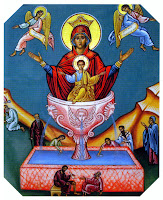
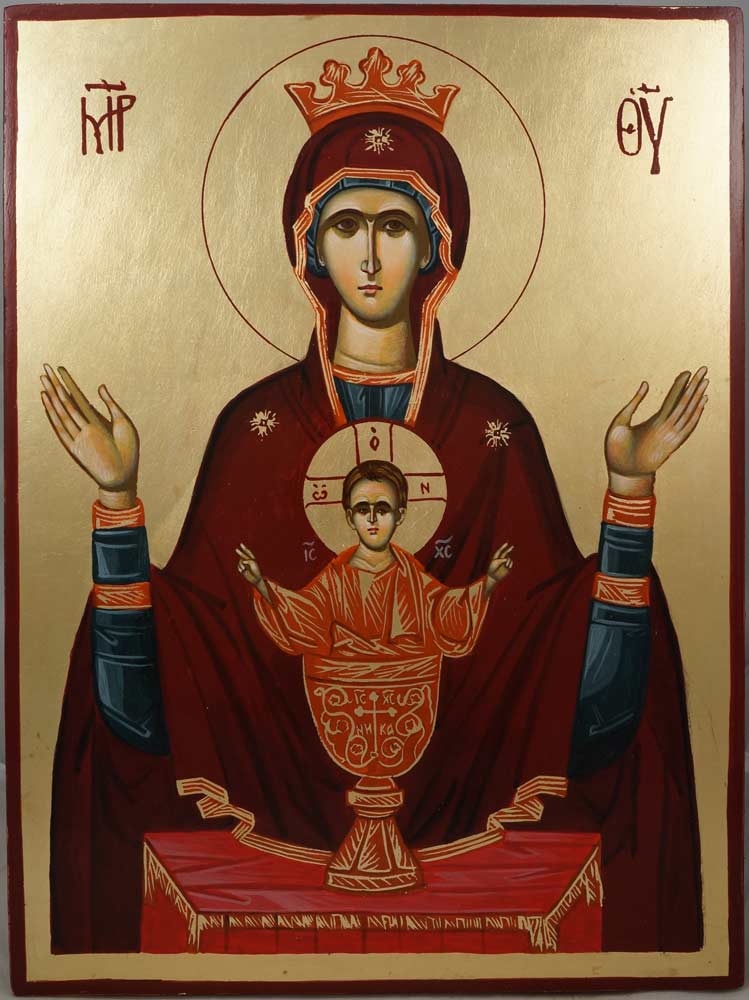
In the light of the doctrines, which the handbook discussed today, there are two icons that are particularly interesting and illustrative. The first is referred to as "Life-Giving Fountain." The other is the "Inexhaustible Cup." I believe that these two icons show us the mystery of Our Lady Mediatrix of All Graces in a pictorial form.

First of all, let's consider the "Life-Giving Fountain." This icon is commemorated every year on the Saturday after Pascha. It shows the Mother of God sitting in a great cup with her Son in her arms. The cup has holes cut into it and water abundantly pours from the holes into a large basin below the cup. The basis of the icon is the story recounted by the Byzantine historian Xanthopoulos that Leo Marcellus, the future Emperor Leo I was travelling past a grove of trees near the city of Constantinople when he encountered a blind man wandering aimlessly in the area, confused and disoriented. Leo rescued the man and took him into the grove where he found a spring. He gave the man water from the spring. He was also moved by divine inspiration to take the mud from the spring and anoint the man's eyes. The man's sight was miraculously restored. After Leo became Emperor, he had a lavish church built on the spot, which housed the miraculous spring that continued to pour forth miracles, even raising the dead. The existence of the spring is a symbolic representation of the truth that all of God's graces pour forth from the Mother of God. This is the reason why, in the icon, the Virgin is pictured seated in the cup, holding Christ in her arms, while all the living water flows from her.

The icon of the Inexhaustible Cup is somewhat different. In this image, we have the Mother of God standing before an altar in an orant position. Before her there is a chalice. Standing in the chalice is the figure of her Son with His hands extended in blessing.

This second image shows to us that the Most Holy Mother of God is not the Life-Giving Cup, but she is its minister. It is she who dispenses to us the gifts of that chalice in answer to our prayers. This icon is venerated throughout the Eastern Christian world as an anti-addiction icon. This inexhaustible cup is said to satisfy the thirst of those who seemingly have unquenchable passions.

It seems to me that there are two relevant questions when we gaze upon these holy images. First, how do I drink from the life-giving contents of this cup, depicted in these two icons? Second, how do I draw others to satisfy their thirsty souls with the sole source of God's grace? The answer to these two questions is essentially the same. We partake of this life-giving source through faith and prayer. Prayer and faith are a loop. It is true that we advance in prayer because of our faith, but it is also true that our faith is deepened because of our prayer. The more we pray, the stronger our faith. The stronger our faith, the more we open ourselves to God's interior, ineffable and miraculous action. The greater our faith, the more others will be attracted to attain what we have. This is especially true when others perceive that faith is free of meaningful cost, that there is only gain in the ways of faith, because of the inherent generosity of God. 

Saturday, May 13, 2023

Занурення в Таїнство Христа Plunging into the Mystery of Christ

Слова, якими святий Йоан Богослов описує події сьогоднішнього євангельського читання, самі по собі дуже захоплюючі. Так само, як в англійській чи українській мовах, у грецькій мові існують різні слова для опису різних типів басейнів. У випадку цього читання, як ми бачили в читанні неділі розслабленого, євангелист використовує слово колимвитра, слово, яке походить від дієслова колимвао, що означає занурюватися або пірнатися у воду (зазвичай у контексті моря). Саме це дієслово, у свою чергу, походить від іменника колимвос, що означає водолаз. Іншими словами, виходячи з простого значення слів, ми маємо справу з дуже значною кількістю води. Це більше, ніж просто відбиваючий басейн або дитячий басейн. За простим значенням цих слів, ми бачимо тут басейн, який достатньо великий, щоб зануритися чи пірнути в нього. Підсилює це сприйняття той факт, що те саме слово для «басейну для пірнання» вживається тричі в грецькій версії Старого Завіту. Два з цих випадків, один раз у Другій Книзі Царств і один раз у Книзі Неемії, це слово вживається для опису Верхнього басейну та Царського басейну, обох відомих споруд, побудованих царем Єзекією для збору величезної кількості води всередині стін Єрусалиму, щоб допомогти мешканцям міста під час облоги. В останньому випадку, в Книзі пророка Наума, ассирійське місто Ніневія зображено як «басейн для пірнання», води якого стримуються дамбою. У видінні пророка дамба проривається, і всі, хто знаходиться поблизу, змушені тікати, рятуючи своє життя, щоб не потонути в наступному потопі.

The words which Saint John the Theologian used to describe the events in today's gospel reading are very fascinating in themselves. Just as in English or Ukrainian, there are different words available in the Greek language to describe various different kinds of pools. In the case of this reading, just as we saw in reading for the Sunday of the Paralytic, the Evangelist uses the word kolymvythra, a word which is derived from a verb kolymvao, which means to plunge or dive into water (usually in the context of the sea). This verb itself is, in turn, derived from the noun kolymvos, which means a diver. In other words, based on the plain meaning of the words, we are dealing with a very significant amount of water. This is more than a mere reflecting pool or wading pool. By the simple meaning of the words, we are seeing here a pool that is big enough to plunge or dive into. Reinforcing this perception is the fact that the same word for "diving pool" is used three times in the Greek version of the Old Testament. Two of those times, once in the Second Book of Kings and once in the Book of Nehemiah, the word is used to describe the Upper Pool and the King's Pool, both known structures built by King Hezekiah to collect vast amounts of water within the walls of Jerusalem, in order to assist the inhabitants of the city in time of siege. In the last instance, in the Book of the Prophet Nahum, the Assyrian city of Nineveh is depicted as a "diving pool," the waters of which are held back by a dam. In the prophet's vision, the dam breaks causing everyone nearby to flee for their lives, lest they be drowned in the ensuing deluge.

Навіть посилюючи наше сприйняття, дієслово, від якого залежить наш «басейн для пірнання», один раз вжито святим Лукою в Книзі Діянь Святих Апостолів. Там римський солдат, який опікувався святим Павлом та іншими в’язнями, наказує їм пірнути в море і плисти до берега, щоб уникнути уламків корабля, який сіл на риф.

Even further enforcing our perceptions, the verb upon which our "diving pool" depends is used once by Saint Luke in the Book of the Acts of the Holy Apostles. There, the Roman captain in charge of Saint Paul and the other prisoners orders them to dive into the sea and swim to shore, in order to escape the wreckage of the ship, which had run aground on a reef.

Кожна з цих неділь після Пасхи дає нам мотив хрещення, образ води, який допомагає нам поглибити наше розуміння та оцінку Таїнства Хрещення і всього Пасхального Таїнства, яке воно представляє. Але тут ми маємо певний контраст. Слово ваптісма «хрещення» походить до нас від слова, яке означає «умочати». Умочання та пірнання - це два дуже різні поняття, розділені багатьма ступенями.

Each of these Sundays after Pascha give us a baptismal motif, an image of water that helps us to deepen our understanding and appreciation of the Mystery of Baptism and the entire Paschal Mystery, which it represents. Yet, here we have a bit of a contrast. The word "baptism" comes to us from a word that means to "dip." Dipping and diving are two very different concepts separated by many, many degrees.

З одного боку, для Церкви легко зробити нас дитиною Божою, Їй потрібно лише «умочати» нас у воду життя, якою є Христос. Але з іншого боку, нам не так легко стати дитиною Богом, удосконалити в собі Його подобу. Це правда, що Церква «умочає» нас до участі в Тайні Христа, але для нас це має бути як пірнання у велике море. Ми постійно шукаємо в своєму житті комфорт і зручність. Завжди робити це є результатом нашої занепалої людської природи. Тим не менш, слідувати за Господом Ісусом не є ані комфортно, ані зручно. Це розп'яття. Це занурення у велике море страждань і смерті Господа Ісуса, щоб ми могли вийти з Ним, по той бік, у світлі й житті Воскресіння.

On the one hand, it is an easy thing for the Church to make us a child of God, She only needs to "dip" us in the water of life, which is Christ. On the other hand, however, it is not so easy a thing for us to grow into a child a God, to perfect His likeness in us. It is true that the Church "dips" us into participation in the Mystery of Christ, but for us it has to be like a plunge into a great sea. We are constantly look for comfort and convenience in our life. To always do so is the result of our fallen human nature. Nevertheless, following the Lord Jesus is neither comfortable nor convenient. It is crucifixion. It is plunging into the great sea of the suffering and death of the Lord Jesus, so that we can emerge with Him, on the other side, in the light and life of the Resurrection. 

Отже, як нам стати справжніми дайверами, занурившись у це зобов’язання бути перетвореними у Христі? Практикуючи самозречення, особливо мовчання та молитву. Наші вороги, демони, хочуть, щоб ми були постійно зайняті нашими телефонами та іншими дрібницями цього життя. Йти за Христом означає відкинути цей демонічний ритм світу. Це означає відмову від суєти та поспіху світу, щоб прийняти тишу та молитовність життя у Христі. Ви коли-небудь плавали серед великих потужних хвиль? Хіба не дивовижно, що на поверхні тільки шум і гам, а під водою панує тільки спокій і тиша? Світ — це галасливе й неспокійне місце, але занурення в Христа робить його спокійним і мирним.

So, how do we become true divers, plunging into this commitment to be transformed in Christ? By practicing self-denial, and especially embracing stillness and prayer. Our enemies, the demons, want us to be constantly busy, continuously occupied with our phones and the other trifling things of this life. Following Christ means rejecting this demonic rhythm of the world. It means refusing the busy-ness and haste of the world, in order to embrace the stillness and prayerfulness of life in Christ. Have you ever been swimming amidst large, powerful waves? Isn't it amazing the way there is only noise and tumult at the surface, but down below the surface of the water there is only peace and silence? The world is a noisy and troubled place, but being immersed in Christ makes it calm and tranquil.


Friday, May 5, 2023

Одружений з Богом вірою Wedded to God in Faith

Коли ми сьогодні розглядаємо розповідь цього євангельського читання, то з даних, які дає нам уся Біблія, стає зрозуміло, що тут ми маємо символічнe весілля. Криниця з чоловіком і жінкою постійно є весільним мотивом у Святому Письмі. Наприклад, у Книзі Буття посланець Авраама, посланий до дому Нахора шукати дружину для сина Авраама, Ісаака, вперше зустрічає біля криниці майбутню наречену Ісаака, Ревеку. Потім, пізніше в тій самій книзі, Яків вперше зустрічає свою майбутню дружину Рахіль біля криниці. Потім, у Книзі Виходу, Мойсей допомагає своїй майбутній дружині Ціпорі в битві з ворогуючими пастухами в контексті зустрічі біля криниці. Чоловік і жінка біля криниці постійно є мотивом весілля, і той факт, що це криниця Якова, робить цей факт ще більш вражаючим і зрозумілим. Євангеліє від Івана говорить про те, що ми маємо нового Якова та нову Рахіль.

When we consider the narrative of this gospel reading today, it is clear from the data, which the entire Bible gives to us, that what we are dealing with here is a symbolic wedding. A well with a man and a woman is continuously a wedding motif in the Scriptures. For example, in the Book of Genesis, the Abraham's emissary, sent to the house of Nahor to seek a wife for Abraham's son, Isaac, first meets Isaac's future bride, Rebecca, at the well. Then, later in the same book, Jacob first meets his future wife Rachel at the well. Then, in the Book of Exodus, Moses assists his future wife Zipporah in battling rival shepherds in the context of an encounter at the well. A man and a woman at a well are consistently a wedding motif, and the fact that this is Jacob's well makes this fact even more striking and plain. The Gospel According to Saint John is suggesting that what we have here is a new Jacob and a new Rachel.

Нехай подивимося на цю тему ще ширше і найпильніше. Господь Ісус, Втілений Бог, кличе самарянку від її перелюбних стосунків із кількома чоловіками до ексклюзивних стосунків із Собою, як своїм Месією та Спасителем. Таким чином, Євангеліє нагадує стосунки між Богом і Його народом у Старому Завіті, коли пророки знову і знову описували поклоніння ідолам в Ізраїлі як перелюбні стосунки. Господь Ісус не кличе її до ще одного плотського стосунку. Він кличе її до спільного життя з Богом. Це має на увазі святий апостол Павло, коли каже: «Хіба ви не знаєте, що той, хто з’єднується з повією, є з нею одним тілом? Бо сказано: двоє стануть одним тілом. А хто з’єднується з Господом, той з Ним один дух». Дозволити іншим речам мати право на ваше серце, окрім Бога, є перелюбом. Бог бажає відкликати нас від цього, щоб зробити нас винятково Його власними.

Let us look even further and most intently on this theme. The Lord Jesus, the Incarnate God, is calling the Samaritan woman away from her adulterous relationships with several men, to an exclusive relationship with Himself, as her Messiah and Savior. In this way, the Gospel recalls the relationship between God and His people in the Old Testament, when, again and again, the prophets described the worship of idols in Israel as adulterous relationships. The Lord Jesus isn't calling her to just another carnal relationship. He is calling her to share the same life with God. This is what the Holy Apostle Paul means when he says, "Don't you know that the one who join himslef to a prostitute is one body with her? For it is said, 'The two shall become one flesh.' But the one who joins himself to the Lord is one spirit with Him." To allow other things to have a claim on your heart besides God is adultery. God desires to call us away from that, in order to make us uniquely His own.

Отже, як виглядає цей шлюб між Істинним Богом і нашою душею? Чого очікує від нас цей Бог, Який бажає стати нашим духовним Супругом? Звичайно, Він очікує від нас вірності, але це особливий вид вірності. Це вірність у нашій залежності та впевненості, тому що ця залежність та впевненість завжди вкорінені в любові.

So, what does this marriage between the True God and our soul look like? What does this God, Who desires to become our spiritual Spouse, expect from us? Certainly, He expects faithfulness from us, but it is a special kind of faithfulness. It is faithfulness in our dependence and confidence, because that dependence and confidence are always rooted in love. 

Справді, наша історія як народу зводиться до сумного чергування поклоніння Богу та поклоніння собі замість Бога. Наші вороги, демони, постійно намагаються спокусити нас самовпевненістю, тобто самопоклонінням. Самопоклоніння є основою ідолопоклонства. Наші вороги знають, що це дурість. Вони заохочують це через спокуси, бо знають, що відокремлення від Бога призведе до нашої вічної загибелі.

Really, our history as a people is reducible to a sad alternation between the worship of God and the worship of ourselves in the place of God. Our enemies, the demons, continuously try to tempt us into the self-reliance that is self-worship. Self-worship is the basis of idolatry. Our enemies know that it is folly. They encourage it through temptation, because they know that separation from God will lead to our eternal destruction.

Ми повинні бути одружені з Богом у вірності, залежності та довірі. Те, що ми бачимо навколо себе в сучасній культурі, є чимось зовсім іншим. Ми бачимо, як люди відходять від Божих доріг і йдуть своїми шляхами. Роблячи це, ми, люди, перетворюємо прекрасний світ, створений Богом, на щось, що поступово стає все більш і більш потворним. Бог створив людей за Своїм образом і подобою. Чоловіка і жінку Він створив їх. Але в цій вмираючій культурі люди вирішили, що створена природа може бути помилкою. Вони визначили, що чоловіки можуть стати жінками, а жінки можуть стати чоловіками, якщо вони визначать, що втілюються «в неправильному тілі». Потім вони можуть продовжити калічити свої тіла спочатку хімічним шляхом, а потім хірургічним шляхом, щоб переробити себе відповідно до власного розуму та волі. Подібним чином, якщо жінка виявила, що вагітна, але вона вирішила, що не повинна бути вагітною (з будь-якої причини), вона тоді може вирішити, щоб вбити дитину в собі, щоб належним чином заспокоїти фальшивого бога її власного розуму та волі. Брати та сестри, хіба обидві ці жахливості та жорстокості не є виродками ще одного? Зрештою, Бог створив сексуальну здатність для її дітородної сили, наділивши її об’єднувальними властивостями заради побудови сім’ї. Але люди вирішують зловживати цією здатністю лише заради задоволення, знецінюючи та принижуючи таким чином своє власне життя та життя інших.

We need to be married to God in the faithfulness of dependence and confidence. What we see around us in the current culture is something quite different. We see human beings departing from the ways of God and going their own ways. In doing this, we human beings are transforming the beautiful world that God has created into something that is by stages more and more ugly. God made human beings in His own image and likeness. Male and female He created them. But, in this dying culture, human beings have decided that their created nature might be a mistake. They have determined that men can become women and women can become men, if they determine that are incarnated "in the wrong body." They can then proceed to mutilate their bodies first chemically, and then surgically, in order to remake themselves according to their own minds and wills. Similarly, if a woman finds herself pregnant, but she determines that she should not be pregnant (for whatever reason), she can then choose to murder the child within her, so that the false god of her own mind and will is duly appeased. Brothers and sisters, are not both of these enormities and cruelties the bastard children of yet another? After all, God created the sexual faculty for its procreative power, giving it its unitive properties for the sake of building up the family. But human beings decide to misuse this faculty for pleasure alone, thus devaluing and degrading their own lives and the lives of others. 

Що з усім цим не так? Що не так з нашою людською самовпевненістю та незалежністю, у якій ми слідуємо рішенням власного розуму та волі незалежно від волі Бога? Просто, це людина, звернена сама в себе. Це егоїстично. Це нелюбов. Егоїзм і нелюбов є характеристиками пекла.

What is wrong with all of this? What is wrong with our human self-reliance and independence, in which we follow the determinations of our own minds and wills apart from the will of God? Simply, it is the human being turned in on himself. It is selfish. It is unloving. Selfish and unloving are the characteristics of Hell.

Бог кличе нас одружитися з Ним у вірності повної довіри. У наших повсякденних обставинах ми повинні бути впевнені, що Бог дасть нам усе необхідне для нашого життя і спасіння. Під час наших молитов, коли ми говоримо: «Нехай буде воля Твоя, як на небі, так і на землі», нехай скористаємося цією нагодою, щоб перевірити свої серця щодо наших бажань і нашої довіри. Чи маємо ми таку довіру до Бога, що Він завжди бажає нам добра?

God is calling us to be wedded to Him in the faithfulness of complete trust. In our day-to-day circumstances, we have to be confident that God will give us everything necessary for our life and salvation. In the course of our prayers, when we say, "Thy will be done on earth as it is in Heaven," let's take that opportunity to examine our hearts concerning our desires and our trust. Do we have that kind of confidence in God that He always wants our good?