Saturday, January 30, 2021

CHRIST REJOICES TO COME TO US

Each year, the length of the postfeast of the Presentation of the Lord in the Temple changes on account of the service of the Lenten Triodion.  This year, we will celebrate this feast for only four days, so as to conclude the feast on the Friday before the 1st Saturday of the Departed.  However, we are fortunate that we have the opportunity to meditate on this joyful feast together with the Sunday of the Prodigal Son—the Second Sunday of the Lenten Triodion, because this parable about the Prodigal Son—today’s Gospel reading—describes the person, who abandons God, the Father, and wanders in sin, and then by the grace of God, returns to the Father.  The same parable also illustrates the manner in which Jesus Christ, the Son of God, came forth from the Father in order to take on the likeness of our sinful nature, and reconciling us to the Father, He returned to the Father’s Heavenly Throne.  In the Mystery of the Incarnation, He accepts the likeness of the human being, who wanders in the darkness of sin, even though He Himself never committed sin.

     The feast of the Presentation of the Lord reminds us that we human beings are historical beings.  We understand everything by means of timelines and dates, and we also try to understand God’s Mysteries by this same method.  But, the Holy Mysteries are eternal, and when we say this, we mean more than they will endure forever, with everlasting duration in time.  Instead of this, we mean that God exists now, always now, in an everlasting present moment.  Therefore, the Holy Mysteries, which accomplish our salvation are present in all their parts.  Perhaps we have noticed that many times during the liturgical year, we begin the dismissal of our divine services with the words “ Christ our true God… for the sake of our salvation,” for example “Christ our true God, who was born in a cave in Bethlehem of Judea and lay in a manger for our salvation,” or “Who, in accord with the Law, accepted circumcision on the eighth day for our salvation,” or “Who willed to be carried in the arms of the righteous Simeon for our salvation.” Well, which of these things accomplished our salvation? All of them, and the fullness of salvation is present in every one, just as in the body every cell contains all the genetic material of the entire organism.

     During the postfeast of the Presentation, on the 4th day of February, we commemorate our venerable father St. Isidore of Pelusium.  St. Isidore wrote thousands of letters, in which he explained the Holy Mysteries of Christ.  In these letters, he elaborated the words, which the Holy Apostle Paul uttered regarding the Mysteries, namely that Jesus Christ is Priest, the Altar and the Lamb of Sacrifice, and he explained that in the celebration of the Holy Mysteries, our altar is the mystical Bethlehem, the mystical Golgotha and the mystical, life-giving Tomb of the Lord.  St. Isidore tells us that the clothes and veils, which we use to cover the holy gifts, represent the clothes wherein the Lord Jesus was swaddled.  From our altar—the mystical cave of Bethlehem, we receive the true Christ, the King of All, just as St. Simeon received Christ into his arms, when Christ was borne from the cave of Bethlehem to the Holy Temple.  Why would Christ our God want to come to us, and why would he have wanted to rest in the arms of St. Simeon? It is His delight to be with human beings, as the Book of Proverbs tells us.

     During the period between the Nativity of Christ and the Presentation of the Lord, we meditated on our most precious treasure—our dear Child Jesus, Who came forth from the Father to the poor, humble cave of Bethlehem in order to save us.  But, what is God’s most precious treasure? It is His Image—the human being.  God has no love for humanity.  No, His immeasurable love is for each, individual human being.  It is the same love with which He loved Adam, and now, most importantly, it is the same love with which God the Father loves His Only-Begotten Son, the Second Person of the Blessed Trinity.  In Christ, each of us becomes the Prodigal Son, the heir of the Father’s Heavenly Throne.

     Sinful humanity has a strong preference for elaborate, mighty and impressive governmental systems, but God cares about the good of His image.  Naturally, He recognizes that governments must exist for the welfare of individual human beings, but human beings make governments, while God created the human being.  A government must never take away what belongs to the human being without a just reason.  In fact, according to the traditional moral teaching of the Church, the family should never do what the individual human being is able to do (when the family does what the individual is able to do, we end up with lazy people), and an association of any kind should never do what the family is able to do; and also, the local government should never do what an association is able to do, and so on all the way up to the highest levers of the central, national government.  This moral teaching is called “the principle of subsidiarity,” because all of these other human structures were made by human beings in order to assist the family and the individual human being, which were created by God.

     Individually, each human being has a personal relationship with God, and, in Christ, we take part in the relationship that the Father has with His Only-Begotten Son.  Each of us is beloved, just like St. Simeon.  Christ rejoices to come to us.  Let us be attentive, for indeed He comes to us, in order to rest in us, just as He rested in the arms of St. Simeon.  He comes from our Holy Altar as from the Cave of Bethlehem to the Holy Temple; He makes each Christian soul to be His Holy Temple—a special place, wherein He can dwell.  Let us pray that soon He will dwell in all human beings in the very same way.  Be welcome, O Salvation that God prepared before the face of all peoples. Be welcome, Light of revelation for the nations, and Glory for us—Your People.


Чому поміркованість так важлива? Why Is Temperance So Important?


Сьогодні в читанні з Першого послання святого апостола Павла до Коринтян ми знаходимо всебічне вчення апостола щодо чесноти поміркованості та її ролі в християнському житті. Ми знаємо, що суть усіх чеснот - це любов. Так би мовити, якщо б чесноти звести до мі́німуму, звести їх до "матерії", з якої в кінцевому рахунку складається кожна з них, було б виявлено, що любов лежить в їх основі. Любов є «формою» всіх чеснот, бо любов - це життя Бога.

Today in the reading from the First Epistle of the Holy Apostle Paul to the Corinthians, we find the Apostle's comprehensive teaching regarding the virtue of temperance and its role in the Christian life. We know that the essence of all the virtues is the virtue of charity. So to speak, if the virtues were to be boiled down, reduced to the "matter" that each of them is ultimately made of, it would be found that charity underlies them all. Charity is the "form" of all the virtues, because charity is the life of God.

Тим не менше, кожна з чеснот відкриває інший аспект цієї єдиної любови, яка необхідна для нашого життя у цьому світі. Поміркованість не є винятком, і аспект, який вона виявляє, справді дуже важливий для нашого повсякденного життя та спасіння. Чеснота поміркованості пом'якшує наше прагнення до задоволення, дозволяючи тим самим переносити страждання і будувати те, що зазвичай називають "характером".

Nevertheless, each of the virtues reveals a different aspect of that one charity, which is necessary for our life in this world. Temperance is no exception, and the aspect that it reveals is truly very important for our daily life and salvation. The virtue of temperance moderates our desire for pleasure, thus allowing us to endure suffering and build what is usually referred to as "character."

Ми повинні розвіяти будь-які міфи з самого початку. Чесноти - це звички. Насправді можна сказати, що "чеснота" - це просто інше слово для "доброї звички". Тверда істина полягає в тому, що чесноти, як і всі звички, слід практикувати, перш ніж вони стануть звичними.

We should dispel any myths right from the beginning. Virtues are habits. In fact, it could be said that "virtue" is simply another word for a "good habit." The hard truth is that virtues, like all habits, must be practiced before they become habitual.

Звичне - це природне і текуче, так як те, що практикується, є неприродним і незручним. Той, хто займався спортом або освоїв музичний інструмент, дуже добре знає цю відмінність. Той, хто може грати на спортивному полі або грати на інструменті природним чином, - той, хто багато годин працював на практиці. Те саме з усіма чеснотами, і особливо з поміркованістю. Проте, на відміну від спортивного поля чи музичного інструменту, оволодіння такою чеснотою, як поміркованість, є ремеслом життя і смерті. Це різниця між рабством і свободою.

What is habitual is natural and fluid, while what is practiced is unnatural and awkward. Anyone who has played a sport or mastered a musical instrument knows this distinction very well. The one who can play on a sports field or play an instrument in a natural way is the one who has labored for many hours in practice. It is the same with all the virtues, and especially with temperance. Yet, unlike the sports field or the musical instrument, mastering a virtue like temperance is a life and death skill. It is the difference between slavery and freedom.

Чому, зрештою, ми повинні намагатися стримувати своє бажання задоволення? Хіба не більшість задоволень, які нам пропонує цей світ, досить невинні? Ну ні. Проблема задоволення від цього впалого світу, в якому ми живемо, полягає в тому, що він є поневоленням. Відступ для задоволення вимагає більше задоволення або для підтримки приємного стану, в якому ми опинилися, або для отримання нових джерел та перспектив задоволення. Щоб звільнитися від рабства до задоволення, ми повинні прийняти невигідність. Ми маємо дотягнутися і схопити те, що неприємно.

Why, after all, should we endeavor to restrain our desire for pleasure? Are not most pleasures, which this world offers us, innocent enough? Well, no. The problem with pleasure in this fallen world in which we live is that it is enslaving. A concession to pleasure requires more pleasure, either for the maintenance of the pleasant state in which we find ourselves, or to acquire new sources and vistas of pleasure. In order to free ourselves from slavery to pleasure, we have to embrace discomfort. We have to reach for and seize what is unpleasant.

Античні філософи до пришестя Христа помічали, що людині добре навмисно привчати себе до труднощів. Наприклад, члени школи стоїків ви́найшли вправу під назвою "Амор Фаті", що означає "Любов долі". У цій вправі людина навмисно сприймає певні страждання або труднощі, яких боялася, щоб страх перед деякою нестачею міг бути знищений, а потім людина могла жити вільно від тиранії втратити якесь вже отримане задоволення. Таким чином, студенти йшли без їжі, щоб заглуши́ти свій страх перед голодом. Вони ходи́ли із зав'язаними очима, щоб пом'якшити свій страх перед сліпотою. Вони обмежувались у маленькій кімнаті, щоб заглушити свій страх перед ув’язненням. Вони відмовлялися від улюблених розваг, щоб заглушити свій страх втратити саме ці розваги. У кожному випадку, витримавши певний час, вправа спрямовувала їх поглянути на свій досвід і запитати себе: "Це те, чого ти боявся?" Таким чином, вони формували свої характері, виключаючи рабство до задоволення, переносячи добровільні страждання.

Ancient philosophers before the coming of Christ noticed that it was good for a human being to purposely accustom his or herself to hardship. The members of the Stoic school, for example, invented an exercise called "Amor Fati," which means "The Love of Fate." In this exercise, a person would intentionally embrace some suffering or hardship that he feared, so that the fear of some privation could be destroyed and the person could then live in freedom from the tyranny of losing some pleasure already possessed. Thus, students would go without food to deaden their fear of hunger. They would walk about blindfolded to deaden their fear of blindness. They would confine themselves in a small room to deaden their fear of imprisonment. They would give up favorite pastimes to deaden their fear of losing those particular pastimes. In each case, having endured the privation for a time, the exercise directed them to look at their experience and ask themselves, "Is this what you feared?" Thus, they would mold their characters by eliminating slavery to pleasure by enduring voluntary suffering.

Для нас, християн, чеснота тепер втілилася як людина. Тепер ми можемо досягти вершин чесноти просто шляхом наслідування Людині, Яка Са́ма Чеснота. Це особливо вірно, коли йдеться про основні чесноти мужності та поміркованості. Мужність пом’якшує гнів та інші запальні пристрасті. Як мужність, так і поміркованість найбільш чітко продемонстровані в житті Господа Ісуса через Його страждання. Хоча це правда, що терпіння Господа під стражданням чітко демонструє повноту мужності, поміркованість проявляється в Його добровільному прийнятті страждань. Він добровільно прийняв страждання, страждаючи до смерті. Наслідування прийняття страждань є важливою частиною життя кожного християнина.

For us Christians, virtue has now become incarnate as a human being. We are now able to arrive at the heights of virtue simply through emulation of the Person, Who is Virtue Itself. This is particularly true when it comes to the cardinal virtues of fortitude and temperance. Fortitude moderates anger and the other irascible passions. Both fortitude and temperance are most clearly demonstrated in the life of the Lord Jesus through His sufferings. While it is true that the patience of the Lord under suffering clearly demonstrates the fullness of fortitude, temperance is displayed in His voluntary acceptance of suffering in the first place. He voluntarily accepted suffering, suffering unto death. Emulating this acceptance of suffering is an important part of the life of every Christian.

Тому ми повинні практикувати поміркованість, і ключовим словом є "практикувати". Спочатку, як потрібно, це буде дуже неприродно, оскільки ми прагнемо позбавити себе певних задоволень і прийняти певні невигідності. Роблячи це, ми повинні нагадувати про страждання Христа і пропонувати свою "практику" в поєднанні з Його стражданнями.

Therefore, we have to practice temperance, and "practice" is the keyword. At first, as needs be, it will be very unnatural as we seek to deprive ourselves of certain pleasures and embrace certain discomforts. As we do this, we should call to mind the sufferings of Christ and offer our "practice" in union with His sufferings.


Saturday, January 23, 2021

Святе письмо може зробити нас мудрими завдяки вірі у Христа Ісуса The Scriptures Can Make Us Wise Through Faith In Christ Jesus


Сьогодні, у читанні Апостола, святий апостол Павло каже Тимофію, що переслідування неминуче для всіх, хто справді хоче жити у Христі. Можливо, у жодному іншому періоді новітньої історії цей пункт не відображався так добре. Насправді Церкву переслідують у всьому світі способами, яких ніколи раніше не бачили, і з інтенсивністю, досі невідомими. Іноді це переслідування виникає внаслідок географічної близькості Церкви до територій з мусульманською більшістю, а інколи переслідування в нашому світі виникає від тоталітарних режимів, таких як комуністичний Китай. Навіть у нашій власній країні зараз є новий ідеологічний та законодавчий поштовх до того, щоб визначити тих, хто вірить в об'єктивні чесноти та вчення Євангелія Христового, "домашніми терори́стами", навіть коли влада в широких регіонах країни намагалася припинити поклоніння Богу в ім'я громадського здоров'я.

In the epistle reading today, the Holy Apostle Paul tells Timothy that persecution is inevitable for all those who truly want to live in Christ. Perhaps at no other period in recent history is this point so well displayed. In fact, the Church is being persecuted throughout the world in ways that have never seen before, and with intensity heretofore unknown. Sometimes, this persecution arises from the Church's geographical proximity to territories with Muslim majorities, and other times, persecution in our world arises from totalitarian regimes like communist China. Even in our own country, there is now a new ideological and legislative push to designate those who believe in the objective virtues and teaches of the Gospel of Christ as "domestic terrorists," even as authorities in wide swathes of the country have tried to end the worship of God in the name of public health.

Проте, продовжує Павло, Тимофій та подібні до нього витримають і навіть отримають користь від переслідування, бо вони дізналися правду безпосередньо від самого Бога. Це те, що має на увазі Павло, коли каже: "Ти, залишайся вірним тому, чого навчився і в що повірив, бо ти знаєш, від кого ти навчився". Тимофія, продовжує Апостол, Бог навчав ще з самого дитинства через Святе Письмо.

Nevertheless, Paul continues, Timothy and those like him will endure and even profit from persecution, because they have learned the truth directly from God Himself. This is what Paul means when he says, "you, remain faithful to what you have learned and believed, because you know from whom you learned it." Timothy, the Apostle continues, was taught by God even from his infancy through the Holy Scriptures.

Цими словами та багатьма іншими Павло виявляє важливість духовного читання в християнському житті. Передусім завдяки Святому Письму Бог звертається до нас дуже особисто. Якщо ми підходимо до Писань із спокійним серцем, ми зрозуміємо, що Бог намагається донести до нас.

By these words and many others, Paul lays out the importance of spiritual reading in the Christian life. It is primarily through the Scriptures that God speaks to us in a very personal way. If we approach the Scriptures with a quiet heart, we will understand what God is trying to convey to us.

Мене завжди захоплювала творчість французького католицького прозаїка Франсуа Моріака. Це, зокрема́, визначення Моріака злом, має такий великий вплив. Для Моріака зло - це загальна су́ма «обставин життя людини». Більше того, зло - це почуття ізоляції, яке кожна людина має за таких обставин. У світлі цього, Моріак цілком погодився б із святим Павлом, що переслідування неминуче для кожного, хто щиро бажає наслідувати Христа. Однак водночас Моріак розширить визначення переслідування, щоб включити зло, що діє у житті кожної людини.

I have always been fascinated by the work of the French Catholic novelist Francois Mauriac. It is particularly Mauriac's definition of evil, which has such a great impact. For Mauriac, evil is the sum total of "the circumstances of a man's life." Moreover, evil is the sense of isolation that every human being has in those circumstances. In light of this, Mauriac would well agree with Saint Paul that persecution is inevitable for anyone who sincerely wishes to follow Christ. At the same time, however, Mauriac would expand the definition of persecution to include the evil acting in each individual's life.

Нас найбільше стосується розширене визначення Моріака про переслідування. Дійсно, це повинно стосуватися кожного християнина, незалежно від того, живе він у відносному спокої та безпеці чи в "гарячій зоні" активних переслідувань. Переслідування, яке ведеться проти нас від власних обставин, за допомогою світу, плоті та диявола, завжди повинно хвилюва́ти нас найбільше, бо це переслідування може позбавити нашого спасіння.

It is Mauriac's extended definition of persecution that concerns us the most. Indeed, it should concern every Christian the most, whether he lives in relative peace and security or in a "hot zone" of active persecution. The persecution that is waged upon us by our own circumstances, by the world, the flesh and the devil, should always concern us the most, because this persecution can deprive us of our salvation.

Ми станемо жертвою злочинності наших переслідувачів, якщо не вживемо проти них заходів. Замість того, щоб прислухатися до зла, яке нас оточує у нашому житті, наших спокус, наших досад, наших зневір, наших недоліків, нам потрібно слухати Божий голос. Як і Тимофій, ми повинні дотримуватися того, чого нас навчали, тому що ми знаємо Того, Хто нас навчив. Ми не повинні наповнювати свої вуха, наш розум і наше серце новинами про світ, але голосом Божим у Святому Письмі. Бог хоче зробити нас мудрими завдяки мудрості, яка приводить нас до спасіння - вічного життя з Ним у Його Царстві. З іншого боку, новини світу хочуть лише позбавити нас спадщини в Царстві Небесному і потонути в морі пристрастей.

We will fall prey to the malignancy of our persecutors unless we take action against them. Rather than paying heed to the evil around us in our lives, our temptations, our annoyances, our discouragements, our shortcomings, we need to listen to the voice of God. Like Timothy, we have to adhere to what we have been taught, because we know the One Who has taught us. We should not fill our ears, our minds and our hearts with news of the world, but with the voice of God in the Holy Scriptures. God wants to make us wise with a wisdom that bring us to salvation– everlasting life with Him in His Kingdom. News of the world, on the other hand, wants only to deprive us of our inheritance in the Kingdom of Heaven and drown us in a sea of the passions.

Дуже часто, в ім’я того, щоб бути «добре поінформованими», ми проводимо непомірний час, слухаючи новини світу. Якщо ми уважно ставимось до свого психічного стану, до нашого миру чи відсутності миру, ми незмінно виявляємо, що новини про світ викликають тривогу, навіть осквернення. Це викликає у нас відчуття, ніби ми купалися у крові. Ми могли б запитати себе: "чи мені потрібно проводити час із цим? Чи потрібно мені бути "добре поінформованим?" Безсумнівно, відповідь" ні ". Чому? Тому що ми знаємо правду. Наша віра - це істина, і ця істина правдива незмінно. Ніхто не захищає і не допускає вбивства мільйонів невинних людей не може бути справедливим і добрим. Це насправді все, що нам потрібно знати.

Very often, in the name of being "well informed" we spend an immoderate amount of time listening to news of the world. If we are attentive to our mental state, to our peace or lack of peace, we invariably find that news of the world is unsettling, even defiling. It makes us feel as if we have bathed in blood. We could well ask ourselves, "do I need to spend time with this? Do I need to be "well informed?" Doubtless, the answer is no. Why? Because we know the truth. Our faith is the truth, and that truth is immutably true. No one who advocates and enables the murder of millions of innocent human beings can be just and good. That's really all we need to know.

З іншого боку, слухати Бога, безумовно, не вистачає новизни́, але це дає нам спокій і, як нагадує святий Павло Тимофію, воно робить нас мудрими завдяки мудрості, яка може принести нам спасіння. Ми не слухаємо Бога для інформації. Ми маємо стосунки з Богом. Він наш Отець. Ми не слухаємо членів нашої родини для отримання інформації. Ми слухаємо своїх близьких для спілкування. Слухаючи їх, ми входимо в їх досвід, як вони входять у наш. Слухаючи одне одного, ми ділимося життям одне одного. Це дуже різне. Коли ми слухаємо CNN, ми не вступаємо у стосунки з CNN, ми не ділимось досвідом CNN, і вони, звичайно, не вступають у наш досвід. CNN не ділиться нашим життям. Повідомляється лише інформація сумнівного значення. Це сумнівно цінно, бо незрозуміло, яку цінність воно нам приносить.

On the other hand, listening to God certainly lacks novelty, but it gives us peace and, as Saint Paul reminds Timothy, it makes us wise with a wisdom that can bring us salvation. We are not listening to God for information. We have a relationship with God. He is our Father. We do not listen to members of our family for information. We listen to our loved ones for communion. Listening to them, we enter into their experience, as they enter into ours. By listening to one another, we share one another's life. This is very different. When we listen to CNN, we are not entering into relationship with CNN, we are not sharing CNN's experience, and they are certainly not entering into our experience. CNN is not sharing our life. Only information of dubious value is being conveyed. It is dubiously valuable, because it isn't clear what value it brings us.

Коли ми слухаємо Бога, ми не повинні сумніватися, що Він слухає нас, коли ми відповідаємо на молитву. Ми ведемо діалог з Богом, коли медитативно читаємо і слухаємо Писання, тому що ми особи, створені за образом і подобою Божих Осіб.

When we listen to God, we should not doubt that He listens to us as we respond in prayer. We have a dialogue with God when we meditatively read and listen to the Scriptures, because we are persons, created in the image and likeness of the Persons of God.

У цьому році, який ще є новим, давайте приймемо нову постанову витрача́ти більше часу на читання Святого Письма і менше часу на «купання в крові́», споживаючи новини світу. Давайте справді слухати Бога, щоб до цього часу наступного року ми зросли у відносинах з Ним.

In this year that is still new, let's makes a renewed resolution to spend more time reading the Scriptures and less time "bathing in blood", consuming the news of the world. Let's really listen to God, so that by this time next year we will have grown in our relationship with Him.


BEING “GOD-BEARERS”


During the postfeast of Christmas, we saw that all the feasts were commemorations of martyrs.  These martyrs became the royal entourage for the Child Jesus, Who descended from heaven in order to sacrifice His very self for our sakes.

     Now, in the period between the Theophany and the feast of the Presentation of the Lord in the Temple, in which we continue to meditate on the significance of the great Mystery of the Incarnation of our Lord, we bow down before His human nature, worshipping it as the instrument of our salvation.  During this period, our Lord has a new retinue, which escorts Him in gladness and joy from the cave of Bethlehem to the Lord of His Father in Jerusalem.  Now, the members of this new retinue are monks, instead of martyrs, especially the founders of the monastic order in the early Church.  On the fifteenth of January, we commemorated St. Paul of Thebes, the first hermit, then on the 17th of January we remembered St. Antony the Great, who was the first monk. The 20th of January brings us the feast of St. Euthymius the Great, the founder of the monastic order in Palestine. The 25th of January is the feast of St. Gregory the Theologian, the great monk and bishop.  On the 27th we celebrate the Transfer of the Holy Relics of St. John Chrysostom, and the 28th is the feast of Ss. Ephrem and Isaac, Syrian monks.  Finally, the 30th of January is the solemn celebration of the feast of the Three Hierarchs: Basil the Great, the author of the monastic rules, Gregory and St. John.  All these saints are very important and significant, because they are the authors and teachers of monastic wisdom, and together they built the foundation of the Christian, ascetic and moral life.  From Whom did they learn their great wisdom, which teaches detachment from the vanity of worldly things and contempt for the riches of this world? From the Divine Child of Bethlehem, Who was born in a cave, because there was no room for Him in an inn.  Just as the Lord Jesus later said of Himself: “The foxes have lairs and the birds of heaven their nests, but the Son of Man has no place to lay His head.”  These holy fathers of the Church learned the wisdom of poverty from the cave of Bethlehem, in which a little Child, Who was the Mighty God, emptied Himself and took the form of a slave, becoming like us.  These holy monks learned that they had to empty themselves in order to be true disciples of Christ, and heirs of the Heavenly Kingdom.  In this way, they became “God-bearers,” for all of our holy fathers the monks are called “venerable and God-bearing saints.” “God-bearer” means that they carried God in their hearts in order to share Him with all people. 

     Today, we begin the Time of the Triodion with the Sunday of the Publican and the Pharisee.  We heard in the Gospel about the proud Pharisee and the humble Publican, but we ought to remember especially the punch line of this parable: “Everyone, who exalts himself, shall be humbled, but he who humbles himself will be exalted.” Pride is the greatest obstacle in the Christian spiritual life, since it always seems that we have a reason to be proud, when we grow in virtue and live according to the commandments of Christ, but growth in virtue is always a gift of God.

     There is a book, which survives in a number of different versions, called The Miracles of Our Lady Mary, the Two-fold Virgin, and it is a collection of stories about the signs and wonders which the Mother of God worked during the early centuries of Christianity.  This book gives to us a very valuable insight. Again and again, the Most Holy Mother of God delivers the most abominable sinners from death and destruction and misfortune, because they love her and they call out to her for help.  For example, according to these stories, she saved a pregnant nun, a thief, an adulterer, and a cannibal, who had eaten eighty-seven people. In all of these stories, the Mother of God’s compassion proves to be greater than the horrific sins, which are committed by the people.  The compassion of the Mother of God mirrors God’s compassion, for she is the perfect disciple.

     Often, as we think on the lives of the holy monks, who are members of this royal retinue, escorting the Lord Jesus to the Mystery of His Presentation in the Temple, we focus on their ascetical struggles against the passions, their long prayers and their heroic fasts, but their lives are actually stories about the compassion of God. Each and every saint loved God, but God loved him or her first, and each of these holy ones called out to God for help.  Despite our great sins, it is only necessary to call out to our God, and He can save us, if we sincerely love Him.

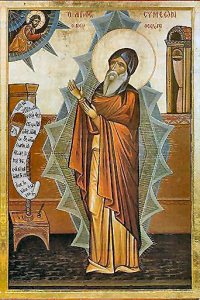
     With this insight, let us mystically go up to the Temple to pray (like the Publican and the Pharisee).  When we behold our Most Holy Lady, the Mother of God, bring in her Son to present Him before the Lord, and to give Him into the arms of just elder Symeon, let us promise to love Him with our whole hearts and to call out to him and to His Holy Mother for help in all our needs, just as we see the Publican doing. We are similar to the saints, when we recognize our dependence on Him, and when we recognize our sinful nature.  In this way, we become small like Him, small enough in fact, so that He is able to embrace us with His grace.  Wondrously, when we become small, and He is able to embrace us with His tiny arms, just as He embraced St. Symeon, we become large enough to bear Him, to become “God-bearers,” who are capable of sharing with all people our precious treasure—our most precious Divine Child.


БУТИ «БОГОНОСЦЯМИ»

Під час посвяття Різдва Христового, ми бачили, що всі празники були на згадку про мучеників. Ці мученики сталися царським почтом для Божого Дитятка, Який зійшов з неба, щоб жертвувати Його Життя. 

     Тепер, ми у періоді поміж Богоявленням і Стрітенням, в якому ми розважаємо над таїнством воплочення Господа нашого, і поклоняємося перед Його людською природою, яка сталася інструментом нашого спасіння.  Під час цього періоду, наш Господь має новий почет, який супроводить Його від Вифлеємської печери до Храму Його Отця в Єрусалимі.  Тепер, члени цього почту є монахами, особливо фундаторами монашого чину в ранній Церкві.  П’ятнадцятого січня, ми святкуємо празник нашого преподобного отця Павла, який був першим затворником, потім, сімнадцятого січня --Святого Антонія Великого, який був першим монахом; двадцятого січня --Святого Євтимія Великого, фундатора монашого чину в Палестині; і двадцять п’ятого січня-- нашого отця між святими, великого монаха та єпископа,  Григорія Богослова; двадцять сьомого січня --перенесення мощей архиєпископа й монаха Святого Йоана Златоустого; двадцять восьмого січня-- Святого Єфрема Сиріського; і накінець, тридцятого січня --урочисте святкування Трьох Святих Ієрархів: Святого Василія Великого, автора монаших правил, Святого Григорія й Святого Йоана.  Всі ці святі важливі тому, що вони є автори та учителі монашої мудрости, і будували фундамент християнського, аскетичного та морального життя.  Від якого вони навчилися цієї мудрости, яка навчає відчужености від марности світових речей й презирства до багатства цього світу? Від Божого Дитятка, яке було народжене у печері тому, що не було Йому місця в заїзді.  Так як Ісус потім описував: «Лисиці мають нори й птиці небесні—гнізда, а Син Чоловічий не має де голову прихилити.» Ці церковні отці навчалися мудрости бідности від печери Вифлеємської, у якій Маленька Дитина, яка була Кріпким Богом, применшила себе саму, прийнявши вигляд слуги, ставши подібним до нас. Вони навчилися, що мають применшитися, щоб бути дійсними наслідниками Христа, і спадкоємцями Божого Царства. Тим способом, вони сталися «богоносці», бо всі наші святі отці називаються «преподобними й богоносними святими.» «Богоносець» означає, що вони носили Бога у їхніх серцях, щоб поділитися Ним з усіма людьми.  

     Сьогодні, ми починаємо період Посної Тріоди, неділею Митаря й Фарисея.  Ми чули читання Євангелія про гордого Фарисея й смиренного Митаря, але ми повинні пам’ятати дуже важливу приказку: «Кожний, хто виноситься, буде принижений, а хто принижується, вивищенний.»  Гордість є найбільшою пасткою християнського духовного життя, бо здається, що ми маємо причину, щоб бути гордими, коли ростемо у чесноті й живемо згідно заповідей Христових, але ріст у чесноті завжди є Божим подарунком.

     Книга, яка наявна згідно кількох варіантів, Чуда Владичиці нашої Марії, Подвійної Діви, колекція різних знаків і чуд, які Богородиця зробила під час ранніх століть християнства, нам дає важне надхнення. Знову й знову, Пресвята Богородиця визволяє огидних грішників тому, що вони її люблять і викликають її на допомогу.  Наприклад, згідно цих оповідань, вона визволила вагітну монахиню, злодія, чоловіка, який порушує подружню вірність, і людоїда, який їв вісімдесят сім людей. У всіх оповіданнях, її співчуття є більшим від страшних гріхів, які люди чинять.  Співчуття Пресвятої Богородиці зображує Боже співчуття, бо вона є перфектною Божою ученицею.

     Часто, ми роздумуємо про життя святих монахів, які є членами цього царського почту, який супроводить Господа нашого до таїнства Стрітення, і зосереджуємось на їх аскетичній боротьбі проти пристрастей, та їх довгих молитвах, але їх життя є оповіданням про Боже співчуття.  Кожний святий Бога полюбив, але вперше Бог їх полюбив.  Кожний святий викликав Його допомогу. Незважаючи на наші гріхи, треба тільки викликати Бога нашого, і Він буде рятувати нас, якщо ми щиро любимо Його.

     Містично заходьмо в храм помолитись разом зі святими монахами цього періоду. Коли ми бачимо, що Пресвята Богородиця носить її Сина, щоб поставити Його перед Господом, і дати Його старшому праведному Симеонові, нехай обіцяємо любити Його цілим серцем і викликати до Нього і Його Святої Матері, так як Митар, бо ми є подібними до святих, коли ми пізнаємо нашу залежність від Нього, і коли ми пізнаємо нашу грішну природу. Тим способом, ми стаємося маленькими так як Він, досить маленькими, щоб Він міг обійняти нас благодаттю Його.  Дивно, коли ми стаємося маленькими, і Він може обійняти нас з маленькими руками так, як обіймав Святого Симеона, ми стаємося досить великими, щоб носити Його, тоді ми стаємося «богоносцями», які можуть поділитися з усіма людьми наш цінним скарбом—нашим прецінним Божим Дитятком.   


Saturday, January 16, 2021

Піднятися на дерево, щоб побачити Господа Going Up On the Tree To See the Lord

 Те, що ми дізнаємося з історії про Закхея в Євангелії від Луки, полягає в тому, що ми, грішники, «не маємо зросту», тобто нам не вистачає благодаті, необхідної для побачення Господа. Своїми зусиллями ми не можемо увійти до Його присутності. Ми не можемо піти на Небо. Єдиний спосіб, яким ми можемо побачити Господа і увійти до Його присутності, - це "піднятися на Дерево". Іншими словами, ми повинні прийняти Хрест. Ми повинні «взяти свій хрест і йти за Ним».

What we learn from the story of Zacchaeus in the Gospel According to Saint Luke is that we, sinners, are "short of stature," that is, we are deficient in the grace that is necessary to see the Lord. By our own efforts we cannot enter into His presence. We cannot go to Heaven. The only way that we can see the Lord and enter into His presence is to "go up on the Tree." In other words, we must accept the Cross. We must "take up our cross and follow after Him."

Кожен з нас отримав Таїнство Хрещення, і це Таїнство правильно розуміється як хрещення у Господню смерть. Ми отримуємо його, щоб ми могли бути мертвими для гріха, але живими для Бога у Христі, як говорить нам святий Павло.

Each of us has received the Mystery of Baptism, and that Mystery is properly understood as a baptism into the Lord's death. We receive it, so that we can be dead to sin, but alive to God in Christ, as Saint Paul tells us.

Нам важливо усвідомити, що ніхто з нас не може брати участь у Воскресінні та славі Сина Божого, не йдучи тим самим шляхом, що й Він. Ми не можемо досягти Воскресіння та Царства Небесного, якщо не пройдемо через страждання та смерть Хреста.

It is important for us to realize that none of us can share in the Resurrection and glory of the Son of God without following the same path that He did. We cannot arrive at the Resurrection and the Kingdom of Heaven, unless we pass through the suffering and death of the Cross.

Як члени Церкви, ми є членами Тіла Христа. Ми справді є клітинами в одному Тілі, яке панує на Небі і сидить праворуч Отця, але ми не можемо забути, що це те саме Тіло, яке проходить через жахливі страждання і саму смерть. Незважаючи на жахливі страждання Хреста і Могили, Воскресіння є певною надією для нас, завдяки нашій ідентичності з Христом. Саме це є причиною того, чому святий апостол Петро робить вражаюче протиінтуїтивне твердження: "Радійте, якою мірою поділяєте страждання Христа".

As members of the Church, we are members of Christ's Body. We are indeed cells in the same Body, which reigns in Heaven and is seated at the right hand of the Father, but we cannot forget that that is the same Body that passes through horrible sufferings and death itself. Despite the horrific sufferings of the Cross and Tomb, the Resurrection is a sure hope for us, because of our identity with Christ. This is precisely the reason why the Holy Apostle Peter makes the shockingly counter-intuitive statement: "Rejoice in the measure you share Christ's sufferings."

Яким є все Тіло, таким має бути і окрема клітина. Немає сенсу для клітини в організмі пере́читися з тілом. Така клітина, насправді, називається раком. Ні, ми повинні відповідати Тілу Христовому; як каже нам святий Павло, ми повинні мати розум Христа. В іншому місці він розповідає нам, що Христос постраждав "як справедлива людина для несправедливих людей". Ми повинні бути однаковими. Наші молитви та жертви повинні бути за всіх, особливо за наших ворогів, щоб вони могли прийти до спасіння.

As the whole Body is, so must the individual cell be. It does not make any sense for a cell in the body to be at cross purposes with the body. Such a cell is, in all actuality, called cancer. No, we must be conformed to the Body of Christ; as Saint Paul tells us, we must have the mind of Christ. He tells us in another place that Christ suffered "as a just person for unjust persons." We must be the same way. Our prayers and sacrifices must be for all, especially our enemies, so that they may come to salvation.

Цей пункт підводить нас до дуже важливого міркування щодо нашого повсякденного християнського життя у церкві візантійських традицій. Коли ми молимося щоденними службами нашої Церкви, ми знаходимо термін, який з’являється знову і знову. Ми повинні запитати себе, "що означає цей термін?" Термін, який ми так часто зустрічаємо, - це «велика милість». Це не просто милосердя, а «велике милосердя». Що це означає? Що ж, ми можемо спокуситися думати, що "велика милість" є синонімом спасіння, але насправді є тонка, важлива різниця.

This point brings us to a very important consideration for our daily Christian life in a Church of Byzantine tradition. When we pray the daily services of our Church, we find a term coming up again and again. We should ask ourselves, "what does this term mean?" The term we find so often is "great mercy." It is not just mercy, but "great mercy." What does this mean? Well, we might be tempted to think that "great mercy" is synonymous with salvation, but in reality there is a subtle, important difference.

«Велика милість» - це енергія Бога, яка приносить спасіння. Отже, ми молимось, щоб це застосо́вувалось до нас, до всього світу і до всього на світі. Дійсно, велика милість діє навколо нас, здійснюючи спасіння через відповідність Христу. Як члени Тіла Христового, велика милість - це наше життя, але це також і наша місія. Ми будемо справжніми членами Тіла Христового лише в тому випадку, якщо інші через нас відчують мир і милість. На практиці це означає, що ми повинні діяти як члени Христа, щоб ви́купити наші гріхи і "робити добро всім людям", як говорить нам Апостол. Це те, що ми бачимо на прикладі Закхея, який вирішив робити добро всім людям, віддаючи половину свого майна бідним, і який викупив свої гріхи, відплативши тим, за що зробив зло, давши їм у чотири рази більше, ніж несправедливо викрадене з них.

"Great mercy" is the energy of God that brings about salvation. Thus, we pray for it to be applied to us, to the whole world and to everything in the world. Indeed, great mercy is active all around us, bringing about salvation through conformity to Christ. As members of the Body of Christ, great mercy is our life, but it is also our mission. We will only be authentic members of Christ's Body if others experience the peace and mercy of Christ through us. In practical terms, this means we must take action as members of Christ to expiate our sins and "do good to all human beings" as the Apostle tells us. This is what we see in the example of Zacchaeus, who determined to do good to all men, giving half his property to the poor, and who expiated his sins by repaying those he had wronged by giving them four times as much as he had unjustly stolen from them. 

Перш за все, тоді ми визнаємо свій невисокий зріст. Ми визнаємо, що ми грішні, що нам потрібна благодать Божа через Хрест Христовий, щоб побачити Бога. Потім ми визначаємо "піднятися на дерево". За прикладом Господа Ісуса ми піднімаємось на хрест і виконуємо своє Хрещення, стаючи пов’язаними з Христом у Його стражданнях. Таким чином, ми виправляємо свої гріхи і стаємо джерелом "великої милості" для оточуючих. Нарешті, ставши пристосованими до Христа в Його стражданнях, ми успадковуємо Воскресіння та славу Христа у майбутньому віці.

First of all, then, we recognize our shortness of stature. We recognize that we are sinners that we need the grace of God through the Cross of Christ, in order to see God. Then, we determine to "go up on the tree." After the example of the Lord Jesus, we go up on the cross and fulfill our Baptism by becoming associated to Christ in His suffering. In this way, we expiate our sins and we become a source of "great mercy" for those around us. Finally, becoming conformed to Christ in His sufferings, we inherit the Resurrection and glory of Christ in the age to come.

OUR SPIRITUAL JOURNEY: THE NATIVITY OF CHRIST TO THE PRESENTATION

 Last Thursday, we completed the postfeast of the Theophany, but the Church continues to meditate on the mystery of the Lord’s Incarnation, His birth in Bethlehem of Judea, and His manifestation through His baptism in the Jordan and the miracle wrought at the wedding feast in Cana of Galilee, all the way up to the feast of the Presentation of the Lord in the Temple on the fortieth day after Christmas, 2 February.  Today, it is necessary for us to recall all that we have experienced since 15 November, when we began the Nativity Fast, otherwise known as St. Philip’s Fast.  Today, we recognize that we are very similar to Zacchaeus, whom we heard about in the Gospel today, for we began this spiritual journey with a desire to see our Lord Jesus Christ.  Therefore, we fasted and prayed for forty days with hearts full of love, and we ardently asked that we be worthy to worship our Incarnate God in the “house of bread.” This is what the word “Bethlehem” means. Our ardent desire was to seek the Bread of Life in that “house of bread,” and during the days of our fast, our hunger for that spiritual bread became greater and greater. Finally, we did indeed enter the cave of Bethlehem, with the coming of the feast of Christmas, and we worshipped the Divine Child with joy.  This true “Bread of Life” we saw wrapped in swaddling clothes and laid in a manger from which animals eat, for in our sins we had become like animals, and the image of God had become darkened, just as the Prophet David tells us: “But man, being in honour, did not understand. He became like the cattle, and is become like unto them. Like sheep they are laid in Hades; death shall be their shepherd.” When we worshipped this mystery, we uncovered the treasuries of our hearts before Christ, and offered to Him gifts, just as the Wise Men from the East offered gifts to the newborn King, for truly we professed by our worship that He is our King, our Priest and our Brother, who shares our human nature.  We recognize gold, as the symbol of kingly power, and frankincense as the symbol of priestly intercession, and myrrh as the symbol of mortal human nature, since it is an embalming agent.  In our hearts, these three symbolic gifts became the emblems of our devotion, for we offered to the Infant Christ the gold of our loving Divine Service, the incense of our prayers and the myrrh of our daily sufferings.  A heart that is full with love for God, prayer and thanksgiving for the Cross of Christ is always the most acceptable sacrifice.  But, our generosity can never outdo the goodness of the Divine Child, for the gift of Himself is a prize of infinite preciousness and worth.  He gave us, as a return for our love, devotion and faith in Him, an increase in the virtues of Faith, Hope and Charity.

     During the postfeast of Christmas, the sheer beauty of our generous God enchanted us to follow Him together with a retinue of martyrs, who shed their blood for His sake, to His circumcision, at which he received the name Jesus, which means “Saviour.” Then, again, we followed after Him to the banks of the Jordan.  There, He washed our human nature with Life-Giving Water and gave us the anointing of the Holy Spirit.  In all these things, we learned that our minds are delighted with paradox, although they hate contradiction.  With this love for paradox, we worship before the Incarnate God, and we pray with the words of the Prophet King David:

Blessed is he that hath the God of Jacob for his helper, whose hope is in the Lord his God; Who made heaven, and earth, the sea, and all that therein is; Who keepeth truth forever, Who executeth judgment for the wronged, Who giveth food to the hungry. The Lord looseth the fettered; the Lord giveth wisdom to the blind; the Lord raiseth up the fallen; the Lord loveth the righteous; the Lord defends the strangers. He shall take for His Own the fatherless and widow, but the way of sinners shall He destroy.  The Lord shall reign forever; even thy God, O Sion, from generation to generation.


An infant child, wrapped in swaddling clothes, loosed those in fetters.  He raised up the fallen, although He could not lift anything (not even His head).  He defended the strangers, although He was not able to defend Himself against the designs of King Herod, but rather St. Joseph had to carry Him away, and flee to Egypt.  He will reign as King forever, although humbly He bowed His head to St. John the Baptist.  He, Whom we refer to as “The Mighty One,” was exceedingly weak in His human nature, just as we are.  Therefore, we promise never to be impressed by the powers of this world. Instead, we will stand in awe before the humility of our Jesus, Who overpowered the Roman Emperors, and kings, and governments in the whole world. 

Monday, January 11, 2021

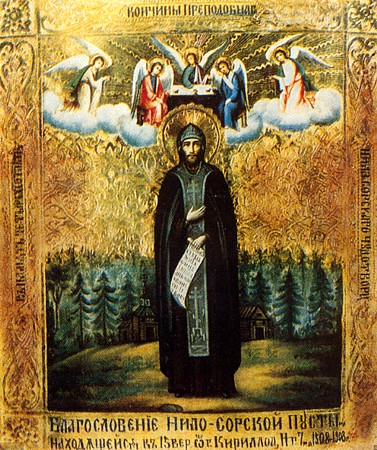
Nil Sorsky: The Ustav's Advice on Gluttony Constitutes a Comprehensive Weight Management Plan


The second section of Nil Sorsky's monastic Ustav presents advice on how to counteract the temptations that proceed from the eight principle passions. In the first subsection of this second section, the specific passion of gluttony is dealt with, in its usual place, according to the tradition passed down from the Fathers of the Church. It is worth noting the organization of the list. The passions are listed in two groups of three, followed by one group of two. The first group comprises passions, which affect the body. The second group contains passions that affect the soul, and the third group enumerates the two remaining passions, which affect the spirit. Gluttony, fornication and covetousness are the bodily passions. The soul's passions are anger, sadness and acedia. The spirit's passions are vainglory and pride.

Gluttony is first in the list and, in the monastic tradition bears a special importance, because the abuse of food is seen to be the root of all the other vices. As a proof of this contention, the tradition points out that it was through the abuse of food that the first man and woman fell into sin and lost Paradise. Developing this line of thought further, Nil notes at the end of the section on gluttony that "How many, not controlling their appetite, fall into a ditch of the vice of impurity and sordidness not describable in words." Thus, he connects the discussion of the vice of gluttony with the next section on fornication.

The specific advice of Nil on the vice of gluttony is both concise and simple. In general, he advises his reader to eat only once per day and for the measure of food to be determined over time through a process of experimentation. He writes: 

"If a monk seems to feel an excessive fullness after a meal, let him decrease the amount during the next meal. But when he sees that the amount of food he had taken was inadequate to sustain his bodily energy, let him then increase the amount a bit more. And in this way after he has learned what is necessary through experience, he should settle upon such a quantity of food that can support his bodily strength. Thus he will not be a slave to the pleasure of the palate, but be guided by what is truly necessary."

Just as the quantity of food is to be determined through an experimental process, so too are specific foods to be taken or avoided according to the individual's constitution. Nil readily admits that the young and the strong may be able to eat almost anything, but that the old and the weak very well may require specific foods in specific quantities.

Although Nil says in two places that the monk is to refuse nothing, it is clear that an exception exists for foods, which the individual monk knows to be harmful to his body. In our modern terms, we would likely put food allergies in this category, and Nil would most likely put strong aversions into the same grouping. The references to "refusing nothing" spring from the practice of Nil's monastery to receive gifts from laity in the form of food. As mentioned above, Nil exhorts his monks to receive every kind of food, which is offered, stressing in one place that every kind of food (even desserts) have a purpose in the building up of the body if used in their proper measure and moderation.

"There are various bodies with differing strengths" Nil admits. So, on this basis, there has to be a further explication of what was laid out above, namely the instruction to determine the measure of food experimentally. That needed explication comes a paragraph later, when the saint writes: 

"In general, a novice can be guided by the best rule, namely to stop eating food when he feels still a bit hungry. But if he feels full, he does not sin in this. But having allowed himself to eat to satiety, let him reproach himself. In this manner he will transform the attack of his enemy and put himself on the path to victory over his enemy."

Nil goes on to discuss the appropriate time during the course of the day to take food. Basically, in accord with the entire monastic tradition, Nil insists that the proper time during the day is the ninth hour (about 3 PM at the vernal and autumnal equinox, but about three hours before sunset during the rest of the year– keeping in mind that anciently the hours themselves in the winter were shorter and those in the summer were longer). On fast days, the monk is simply to wait longer to eat, taking his meal after his prayer at sunset (Vespers).

What Nil outlines in the subsection on gluttony amounts to a comprehensive and holistic weight management program. First, the individual who embarks upon it needs to experientially determine the proper measure of food by deliberately ending his meal when he is still hungry. If his strength is maintained by the amount of food that was taken at the meal, then he only needs to consistently eat the same amount of food (again being careful to halt the meal at a point before satiety). If, however, he feels weak before his next meal, he knows that he must increase the amount of food by a reasonable increment. Second, the individual practicing the program is to adhere to what we would today call "intermittent fasting," taking his meal only once a day in the late afternoon (although Nil allows the addition of a "collation" in the evening if it is necessary for strength).

Ultimately, the discipline requires an individual to reorient himself toward the sensation of hunger. This is the case, because hunger can longer be the determining factor for whether the individual eats. Nil is quite explicit. The determining factor for whether food is taken and in what measure is strength. Hunger, on the contrary, is to be regarded as a sure sign that food is being taken in the appropriate amount. If hunger remains, then the individual has not overeaten. Only his level of strength the following day can determine whether he has undereaten.

The discipline described in the Ustav requires a heightened awareness of the body and its responses to food or the lack thereof. In order to stop eating at the appropriate time (that is, when some measure of hunger is still preserved) it is doubtful that one could eat while otherwise preoccupied by something that would engulf self-awareness (watching engrossing video, etc.). On the contrary, the ideal would be similar to what is sometimes referred to as "mindful eating," in which the person eating is solely intent on the sensations of eating. However, the monastic tradition of table reading also preserves self-awareness.

Saturday, January 9, 2021

Miraculous Water of Life

 Brothers and sisters in Christ—

     The wonderful thing about the Christian Tradition is that it gives to us inspiration and example in the context of every age and every culture the world over.  The furthest corners of the globe, the Gospel of Christ is changing the lives of human beings, ennobling them as children of God, destined to live everlastingly with their Father. 

     In the mountains of Ethiopia, 14,500 ft. above sea level is a vast cave in the side of a mountain.  If we could climb together up the precipitous cliff face to the entrance of the cave, and see the commanding view of the valley of the Blue Nile below, we would see something even more important in the depths of the cave itself.  If we were to walk a short distance into the cavern, we would find a lake, and, the greatest marvel of the place, a very old church that actually floats on the lake.

     The Church of Yemrehanna Kristos was built many centuries ago as a place for pilgrims to worship, for the water of this subterranean lake was shown to be miraculous, working thousands upon thousands of cures of afflicted souls and bodies, since the time that it was blessed by the hand of the Mother of God more than a millennium ago. In fact, this pilgrimage site is back in the news today, since the healing waters of the lake cure AIDS, along with the water also of two miraculous springs in Gondar, a different region of Ethiopia. The United Nations and the World Health Organization have both spared no effort, through so-called “education,” in trying to keep people from going to these holy sites, since they see people from diverse countries all over the continent and beyond putting their trust in God, in the intercession of the Most Holy Mother of God, and in holy water, rather than in their agenda of contraception and drug therapy, that, although ineffective, costly and poisonous, does not offer a cure. On the contrary, the people come to Yemrehanna Kristos to be cured.

     The locals are well aware of the power that flows from the miraculous water in response to their faith.  According to their testimony, there is no affliction, which the sacred water has not cured, but its holiness is so great that it must be treated with the most profound respect.  It is said that the power of the water is so great that it has actually killed those who approach it with the wrong disposition; it has harmed those who drink it without pure hearts. 

     Today we continue the celebration of the Lord’s Theophany, the feast that celebrates the fact that the Lord descended into the water of the River Jordan in His own baptism, in order to sanctify the nature of water, that is, in order to make water a means of sanctification for us.  By descending into the water, he infused His own Divine Life into the water, so that we who are baptized into His death and receive His imperishable life, which He lives because of His resurrection from the dead. 

     We might well think that we have to wait until we die in order to live the Divine Life that the Lord has given to us in our Baptism into His death.  But actually, we already have a share, here and now, in that life. We have to understand that sometimes we call “Divine Life” by a different name.  That name is virtue.  The virtues have been given to us as free gifts of God through our Baptism, and our communion in the other mysteries of Christ, especially the Eucharist, but the extent that we share the immortal Life of God is the extent to which we make those virtues live in our lives.  Of all the many things in this world, only the virtues are permanent. By practicing the virtues, we throw in our lot with the permanent, rather than the passing; we put our trust in the holy water of Baptism, rather than the passing so-called “wisdom” of this world.

     Like the waters of the lake at Yemrehanna Kristos, the water of Baptism and the life it engenders is an awesome thing that must be treated with the most profound respect.  We who have received it must live according to it, with purity of heart, with the practice of virtue our highest goal.

Великe світло: знання про Бога A GREAT LIGHT: THE KNOWLEDGE OF GOD

[Scroll down for English] 

Брати і сестри у Христі--

На свято Богоявлення, ми розмірковували про шлях, яким Таїнство Хрещення-- новий Великий потоп, руйнує старий грішний світ і дає нам нове життя у Христі. Сьогодні, в читанні Євангелія, ми бачимо, Господь починає Своє суспільне служіння. Ця розповідь супроводжується ще одним важливим образом цього нового життя: образ світла. Області, в яких Господь Ісус проповідує Євангелія в цьому уривку описуються як ті,"сидять у темряві". Ця фраза є цитатою з пророцтва Ісаї, який передбачив, що народ Завулона і Нафталі, які сиділи у темряві, побачать світло велике. Він приходить до висновку: "Тим, що сиділи в країні смерти, --зійшло їм світло".

Образ світла дуже важливий в нашій вірі, як і  також в Священному Писанні. На початку, світло був першим з Божих творінь. Книга Буття говорить нам: "На початку Бог створив небо і землю, і земля ж була пуста́ й порожня, і темрява була над безоднею, а Дух Божий ширяв над во́дами. Бог сказав: "нехай буде світло!" І настало світло. І був вечір, і був ранок: день перший." Світло було завжди переважно  образом  Бога .. Ті, хто знає Бога, як кажуть, «ходять в світлі», а ті, хто не знає Бога, як ка́жуть, «живуть у темряві».

Старий Завіт наголошує на  Боже світло (знання про Бога), як творчу силу. Коли це світло світить на Ізраїль, нація процвітає і є ви́купленим від на́слідків своїх гріхів. У пророцтві Ісаї, пророк переможно вітає вигнанців Ізраїля, коли вони повертаються після сімдесяти років. Він говорить: «Радуйся, Єрусалиме, бо ваше світло прийшло.» Коли це ж світло осяює на особу, ця особа підсилена і врятована. У 26-му псалмі цар Давид говорить пророк: «Господь моє світло й спасіння моє. Кого маю боятися?»

Новий Завіт успадковує велику традицію світла, як образ пізнання Бога, але, в той же час, це знання зміни́лося, поглибилося й розши́рилося. Це на сторінка́х Євангелія ми бачимо, що вперше поняття світла, яке йде зсередини. Господь Ісус багато раз відноситься до своїх учнів в якості носії́в світла, яке вони тримають в собі. Він каже їм: «Ви світло світу. Нехай світить світло ваше перед людьми ". Крім того, він говорить їм:«Світильник для тіла є око. Якщо ваші очі здорові, то ваше тіло буде наповнене світлом ».

Отже, що це нове знання про Бога, що світиться зсередини під дією Святого Духа? Пізнання Бога в Старому Завіті було відображено в дотриманні закону, але коли Господь Бог втілився, в перший раз, Бог міг бути імітованим. Ми тепер можемо використовувати життя Христове, як модель нашого життя, і ця імітація нашого Господа стає світлом, що сяє від нас на все творіння. Кожен  з нас, хто хрещений в Христа, отримали це світло. Всі ми зобов'я́зані слідувати за Ісусом Христом в нашому житті. Ми докоряємо  Христу і Церкві, коли ми не доживаємо до покликання, яке ми отримали. Що є покликання? Те, про що святий апостол каже: «Отож, благаю вас я, Господній в’язень, поводитися достойно покликання, яким вас візвано, в повноті покори й лагідности, з довготерпеливістю, терплячи один одного в любові, стараючися зберігати єдність духа зв’язком миру». Коли ми не стали народом молитви, ми приносимо докір Господу і Церкві Коли ми не любимо, ми ганьбимо Христа і Церкву. Велике світло сяяло на нас, але, це світло має світити з нас, щоб світити на інших.


Brothers and sisters in Christ—

                On the feast of the Theophany, we considered the way that the Mystery of Baptism is a new Great Flood that destroys the old world of sin and gives us a new life in Christ.  Today, in the Gospel reading, we see the Lord beginning His public ministry, accompanied by yet another important image of that new life: the image of light.  The areas that the Lord Jesus is seen preaching the Gospel in this passage are described as “sitting in darkness.” This phrase is a quote from the Prophecy of Isaiah, who foretold that the people of Zebulon and Naphtali, a people sitting in darkness, would see a great light.  He concludes, “Upon those who dwelt in the land of gloom, a light has shone.”

                The imagery of light is very important in our faith, as it is also in the Holy Scriptures.  In the beginning, light was the first of God’s creations.  The Book of Genesis tells us: “In the beginning, God created the heavens and the earth, and the earth was a formless wasteland, and darkness covered the abyss, while the Spirit of God swept over the waters.  God said, “let there be light!” And there was light. And there was evening, and there was morning: one day.”  Light has ever been the image of choice for the knowledge of God.  Those who know God are said to “walk in light,” while those who do not know God are said to “dwell in darkness.”

                The Old Testament scriptures put the emphasis on this light of God—the knowledge of God—as a creative force.  When this light shines upon Israel, the nation flourishes and is redeemed from the consequences of their sins.  In the Prophecy of Isaiah, the prophet exultantly greets the exiles of Israel as they return after seventy years.  He says, “Rejoice, O Jerusalem, for your light is come.” When this same light shines upon an individual, that person is strengthened and redeemed.  In the 26th Psalm, the Prophet King David says: “The Lord is my light and my salvation.  Whom shall I fear?”

                The New Testament inherits the great tradition of light as the image of the knowledge of God, but, at the same time, this knowledge is changed, deepened and expanded.  It is in the pages of the Gospels that we see for the first time the concept of the light that comes from within.  The Lord Jesus refers many times to His disciples as the bearers of a light that they hold in themselves.  He says to them, “You are the light of the world.  Let your light shine before men.”  Further, He tells them, “The lamp of the body is the eye. If your eye is sound, then your body will be filled with light.”

                So, what is this new knowledge of God that shines from within by the action of the Holy Spirit?  The knowledge of God in the Old Testament was reflected in observance of the Law, but when the Lord God became incarnate, for the first time, God could be imitated.  We are now able to pattern our lives on the life of the Lord Jesus, and this imitation of our Lord becomes the light that shines forth from us to the whole of the creation.  All of us, who are baptized into Christ, have received this light.  All of us have the obligation to follow Jesus Christ in our lives.  We bring reproach upon Christ and the Church when we fail to live up to the calling, which we have received.  What calling? The one that the Holy Apostle refers to: “I, therefore, the prisoner of the Lord, beseech you to walk worthy of the calling to which you have been called, with all lowliness and meekness, with longsuffering, bearing with one another in love, endeavouring to keep the unity of the Spirit in the bond of peace.” When we fail to become people of prayer, we bring reproach on the Lord and the Church.  When we fail to love, we bring reproach on Christ and the Church.  A great light has shone on us, but that light must shine from us, if it is to shine on others. 


Saturday, January 2, 2021

ІМІТУЮЧИ ЧЕСНОТИ СВЯТОГО ЙОАНА IMITATING THE VIRTUES OF SAINT JOHN


Неділя перед Богоявленням нам дає приклад Святого Йоана Хрестителя у читанні від Євангелія Святого Марка. Святий Йоан є дуже важливий приклад для нас у духовному житті, тому що він так, як Свята Богородиця і Приснодіва Марія, завжди свідчить до Христа, завжди вказує на Нього і приносить нас до Нього. Іншими словами, він не жив для себе, але для Бога. Хоча він перетерпів дуже великі страждання задля правди, він був найблаженішим чоловіком, тому що він узнав, що найбільша радість ісходить від приятельства з Богом. Господь наш Ісус Христос нам каже про Нього- "Ніхто, що був народженим від жінки, не є ліпшим від Йоана Хрестителя," але тоді він додає, "найменша людина, яка є народженою в царство Боже є більшою від Нього." Це є добрими новинами нашого великого привілею, бо Христос наш Бог запрошує нас, щоб стати більшими ніж Святий Йоан Хреститель, Його приятель.  І Господні слова не є перебільшенням, бо людина, що входить в царство Боже, несе тотожність Господа нашого Ісуса Христа. Носити тотожність Господа нашого Ісуса Христа-- це привілей, яким святі Старого Завіту і Святий Йоан Хреститель ніколи не володіли. 


The Sunday Before Theophany gives us the example of St. John the Baptist in the reading from the Gospel of St. Mark. St. John is a very great example for us in the spiritual life, because he, just like the Holy Mother of God, and Ever-virgin Mary, always witnesses to Christ, always points to Him and brings us to Him. In other words, he did not live for himself, but for God. Although he had to endure great suffering for the sake of the truth, he was the most blessed of men, because he discovered that the greatest joy comes from friendship with God. Our Lord Jesus Christ says to us concerning him: "No one born of woman is greater than John the Baptist," but then He adds, "but the least person, who is born into the Kingdom of God is greater than He." This is the good news of our enormous privilege, since Christ our God invites us to become better than St. John the Baptist, His friend. The Lord's words are not an exaggeration, for the person, who enters the Kingdom of God, bears the identity of our Lord Jesus Christ. Bearing the identity of Christ is the privilege, which the saints of the Old Testament and St. John the Baptist never possessed.


Проте, приклад Святого Йоана Хрестителя є моделлю, якою ми навчаємося, щоб приймати запрошення Господа нашого, бо бути запрошеним-- це одна річ, але приймати запрошення, це інша. Отже, це дуже важливе, щоб бути запрошеним до царства Божого у церковних таїнствах, і також вивча́ти шлях, яким ми приймаємо це запрошення, роблячи гідну відповідь. Перш за все, ми знаємо, що ми мусимо мати той же самий фокус як Святий Йоан.  Фокус наших діл має бути цією метою: Щоб приносити інших людей до Христа, незважаючи на кошти наших діл до себе.  Коли ми маємо справи з іншими людьми, вони повинні бачити Христа у наших ділах, наші діла повинні бути повними пахощами життя, страждання і смерти Господа нашого. Це належить тим, що не живуть для себе, а для їхнього Спасителя.


Nevertheless, the example of John the Baptist is a model, by which we learn to accept the invitation of our Lord, since to be invited is one thing, but to accept the invitation is something else entirely. Therefore, it is very important to be invited to the Kingdom of God through the Church's mysteries, and also to study the way by which we accept this invitation, making an appropriate response. First of all, we know that we have to have the very same focus as St. John.  The focus of our actions has to be this purpose: To bring others to Christ, despite the cost of our actions to ourselves. When we have dealings with other people, they should see Christ in our actions; our actions should be full of the fragrance of the life, suffering and death of our Lord.  This befits those, who do not live for themselves, but for their Saviour. 


Але, які чесноти ми спостерігаємо у Святому Йоані, котрі ми повинні імітувати? Забагато, щоб описувати, бо нотуємо у прикладі Святого Йоана всі чотири великі чесноти: мудрість (тому що він жив у пустелі під час його ранішних років, щоб відміняти забруднення від його культури, яке було б відволіканням від його роботи); справедливість (тому що він доглядав за всіма згідно того ж самого стандарту, виговорюючи царям і солдатам, і також звичайним людям); відвагу (тому що він вигово́рював сильним людям без страху і пробував виправити найбільші зло́чини); і поміркованість (тому що він був дуже безпечним про його їжу, одяг і задоволення. Наша праця є імітуванням Святого Йоана згідно цих чотирьох чеснот, бо ці чесноти показують нам шлях, щоб жити у цьому світі так, як богословські чесноти нас навчають шляху, яким треба йти до неба. Так, як ми сказали вище, ми мусимо мати Господнє запрошення показане трьома богословськими чеснотами, але ми також мусимо приймати це запрошення практичними ділами через головні чесноти-- мудрість, справедливість, відвагу і поміркованість.


But, what virtues do we observe in Saint John that we can emulate? Too many to describe, since we notice in Saint John's example all four of the great virtues: prudence (because he lived in the desert during his early years, so as to avoid being contaminated by his culture, which would have been a distraction from his mission; justice (because he treated everyone according to the same standard, rebuking kings and soldiers, as well as ordinary people); courage (because he rebuked powerful people without fear and tried to correct the most horrendous crimes); and temperance (because he was very careful concerning his food, his clothing and his amusements. Our task is to imitate Saint John according to these four virtues, since these virtues show us the way to live in this world, just as the theological virtues teach us the way to go to heaven. Just as we said above, we must have the Lord's invitation, manifest in the three theological virtues, but we also have to accept that invitation by practical deeds through the cardinal virtues-- prudence, justice, courage and temperance.


Згідно прикладу Святого Йоана, ми мусимо вибирати безпечно шляхи, якими ми маємо заняття з цією культурою, бо певні аспекти її життя будуть відволіканням від нашої праці. Це мудрість Святого Йоана, пізнаючи коли і де, щоб стати зайнятими справами цього світу. Ми потребуємо імітувати його справедливість також. Згідно його прикладу, ми повинні доглядати всіх людей тим самим способом. Подібним способом, ми не повинні страхатися, щоб виговорювати іншим людям, коли ми бачимо те, що вони розбиваються через гріх. Якщо ми робимо це без пристрасті, це є знаком любови. Це відвага Святого Йоана. Вкінці, ми повинні імітувати поміркованість Святого Йоана, безпечно вибираючи нашу їжу, пиття, одяг і задоволення, щоб відмовляти увесь показни́й про́яв і надлишок.


According to the example of St. John, we have to choose judiciously concerning the ways that we engage with this culture, since certain aspects of its life will be a distraction from our task. This is the wisdom of St. John, knowing when and where to become involved with the works of this world.  We need to imitate his justice as well. According to his example, we should treat all people in the same way. In a similar way, we should not fear to rebuke others, when we see them harming themselves through sin. If we do this without passion, it is a sign of love. This is the courage of St. John. Finally, we should imitate the temperance of St. John, carefully choosing our food, drink, clothing and amusements, in order to avoid all ostentation and excess.